Asbestos removal
Asbestos in ceilings and walls – ceiling boards, render and removal
Asbestos in ceiling boards, wall boards, render, filler and wallpaper: what it looks like, when it was used, what to do now, what you may do yourself, and how we remove it under negative pressure.
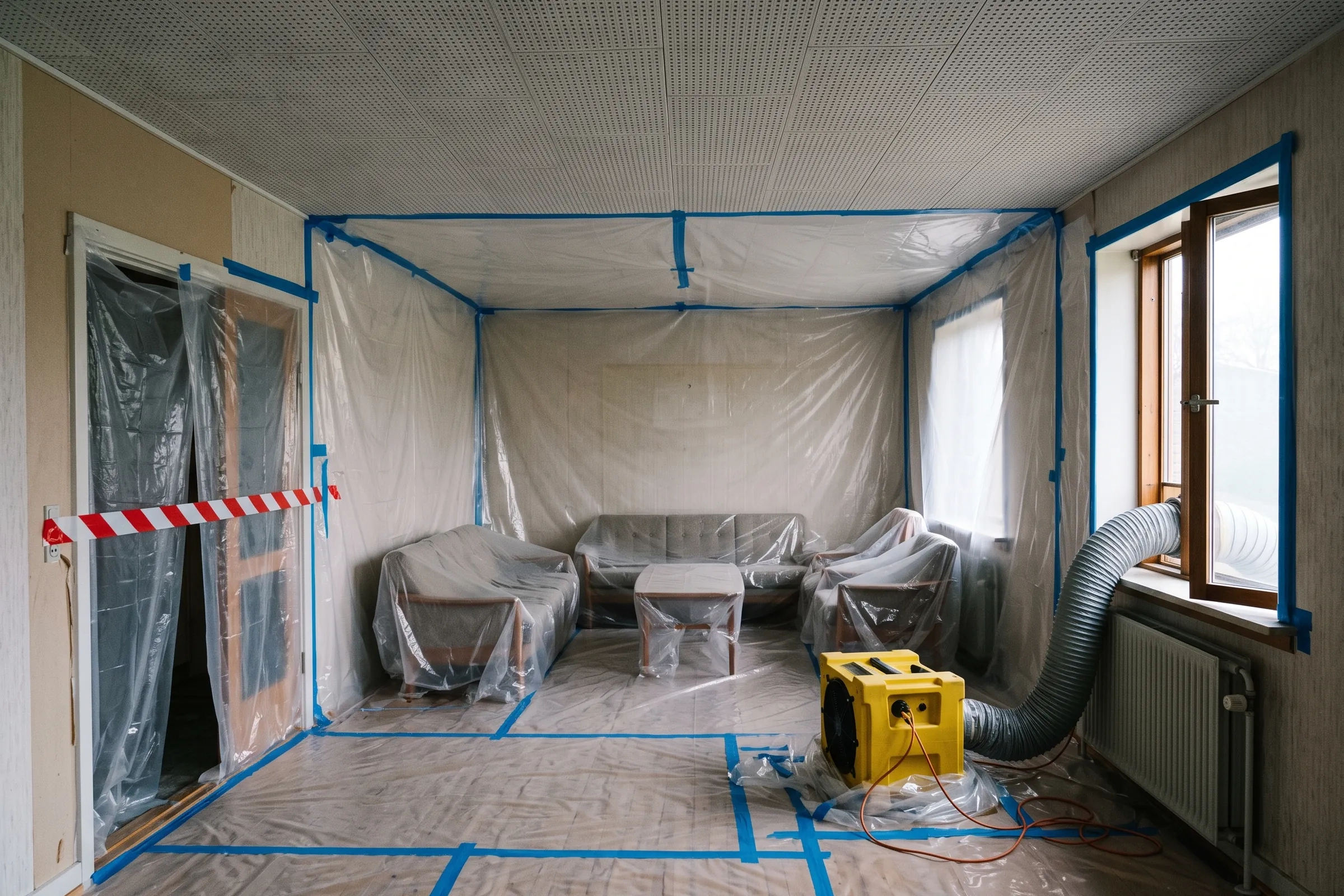
What the price includes. What a quote from us always includes.
- Sampling of boards, filler or render and laboratory analysis
- Notification of the work to the Danish Working Environment Authority
- Sealing the room with an airlock and negative pressure
- Protective equipment and respirators
- Taking boards down whole, with no cutting or sanding
- Packing in closed, labelled bags and transport to an approved waste site
- Cleaning of the structure, clearance measurement by agreement and documentation
Asbestos in ceilings and walls is rarely something you discover until you want a new ceiling or smooth walls. Ceiling boards, wall boards, filler, render and a few wallpaper types from before 1980 can contain asbestos, and they look like anything else. Here you can read where the asbestos sits, what it looks like, what to do before you renovate, what you may do yourself, and how we remove it from a room under negative pressure.
Where does asbestos sit in ceilings and walls?
The most common place is ceiling boards. From the 1950s to the late 1970s, soft, light boards with holes or a pattern were used in living rooms, kitchens, hallways and offices because they dampened sound and were easy to fit. Many of them contain asbestos. Hard, smooth fibre-cement ceiling boards were used both in ceilings and as wall boards in utility rooms, garages, basements and under eaves, and they too can contain asbestos.
Then there are the layers nobody sees: filler and render, sealant and a few types of asbestos-containing paint from the same period could contain asbestos, and behind old wallpaper there can be a filler that releases fibres the day you sand it.
What does asbestos look like in ceiling boards?
The typical question, and the honest answer is that asbestos doesn’t look like anything in particular. The fibres are mixed into the material and cannot be seen with the naked eye. What you can see is the board’s type and age: soft, light boards with small holes or a fine embossed pattern from the 1960s and 1970s are a classic candidate. A smooth, hard board that sounds like stone when you knock on it can be fibre cement with asbestos.
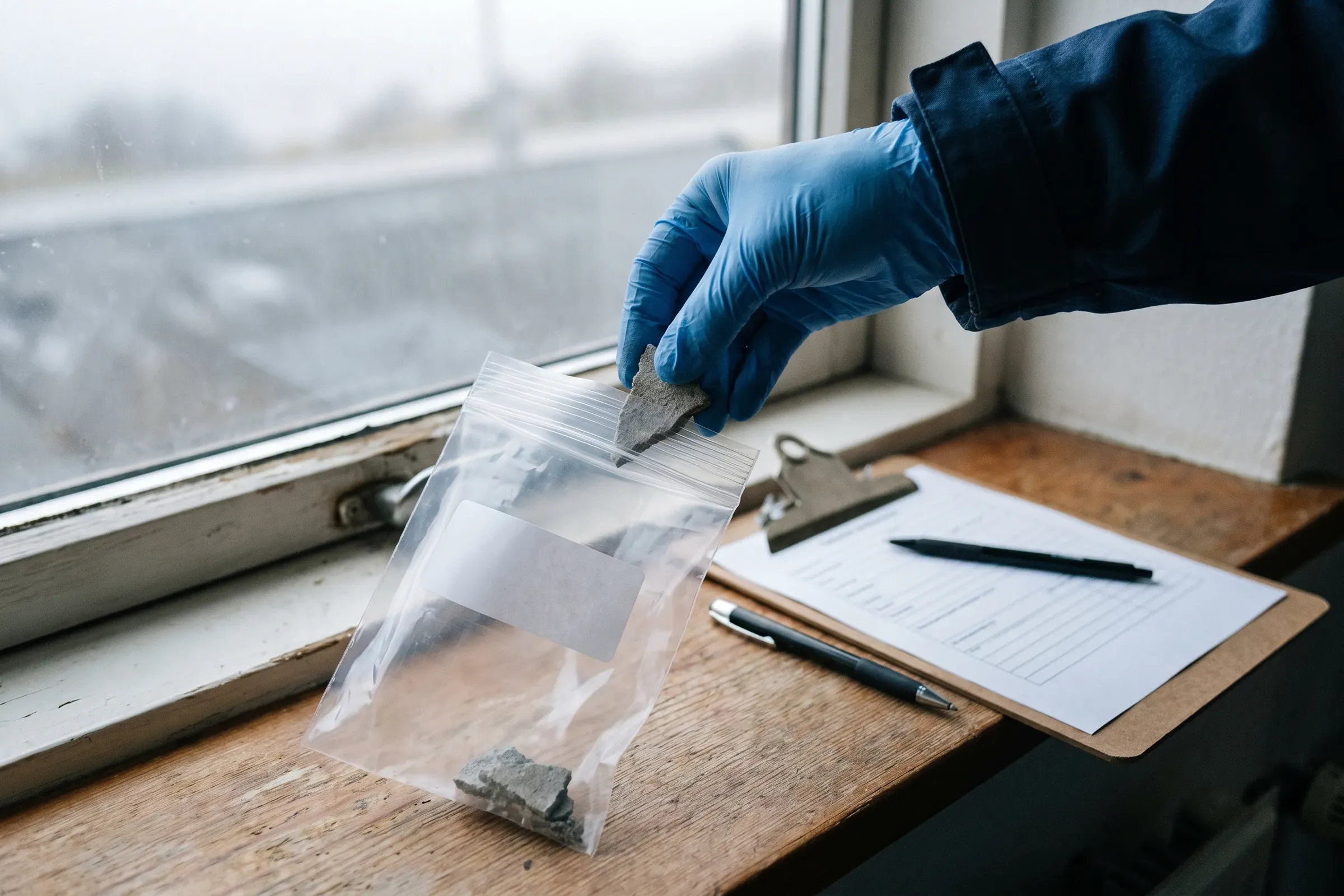
Neither is an answer. We cannot tell by looking, and not from a photo either. We take a small sample from an edge, seal the spot and send the sample for analysis. What an analysis includes is on the page about the asbestos survey.
Wall boards, wallpaper, filler and render
Walls have several layers, and the asbestos can sit in any of them. Fibre-cement wall boards in wet rooms and utility rooms, filler and render on plasterboard and masonry, old paint and a few wallpaper types with a fibrous backing. As long as the layers sit untouched under paint or wallpaper, they release few fibres. It is sanding, scraping, drilling and demolition that send the dust into the room.
If you are only painting, there is rarely any reason to do anything. If you are sanding the filler down, removing the wallpaper or taking the boards off, those layers must be tested first.
What do you do now?
- Don’t take a board down, and don’t put a sander on the wall. Boards that break and dust from sanding settle throughout the home, in ventilation and in textiles, and that is more expensive to clean up than removing correctly from the start.
- Already taken a board down? Close off the room, don’t sweep or vacuum with an ordinary vacuum cleaner, and call us.
- Have a sample taken. We take a sample from an edge of the board, the filler or the render, seal the spot and send it for analysis. You get the answer in writing per material.
- Decide from the answer. If there is no asbestos, your tradesperson carries on. If there is, you get a fixed quote for removal after a site visit, and you can see what drives the price on the pricing page.
Can you take ceiling boards with asbestos down yourself?
As a rule, no. Since 1 January 2025, demolition of asbestos-containing material requires an authorisation. The exception is brief demolition work of a minor nature, and a ceiling in a whole room, a wall or a layer of filler that has to be sanded off is not that. A few whole boards taken down without breaking may fall under the exception, but the rules on dust and waste still apply: no sanding, no cutting, wet the material, pack it in sealed, labelled packaging, and deliver it as your municipality directs.
A job may not be split into small ones to avoid authorisation. What you may do yourself, and what still applies when you do, is in the guide to the asbestos rules.
How we remove ceilings and walls under negative pressure
The work is notified to the Danish Working Environment Authority before we start. We work room by room: the room is emptied or covered, sealed with an airlock, and put under negative pressure so air only flows into the room and out through a filter. Everyone in the room wears a respirator and a suit. The boards are taken down whole with screws and nails removed first, without being cut or sanded, and packed straight into closed, labelled bags. Filler and render are removed with tools connected to an asbestos vacuum. The waste is taken to an approved waste site.
After the removal: cleaning and clearance measurement
Once the boards are down, we clean the ceiling structure, walls and floor with an asbestos vacuum and wiping so your tradesperson can fit the new ceiling or skim the wall. By agreement we take a clearance measurement of the air in the room before it is released. You get documentation of notification, disposal, any measurement and the work carried out.
Disposal of ceiling boards and render with asbestos
Whole boards are packed in sealed plastic, filler, render and small pieces in double, sealed bags, and everything is labelled “asbestos” and taken to the approved waste site the municipality directs, separate from other building waste. Dusting waste is wetted before packing, and whole boards are not broken to take up less space. You get the receipt from the waste site as part of the documentation. If the work affects more than 10 m² or produces more than 1 tonne of waste, you as the building owner must also notify the building waste to your municipality; we help with the figures.
What does it cost to remove asbestos in ceilings and walls?
Three things decide the price: the area, the number of rooms that have to be sealed separately, and whether the boards come down whole or sit in filler and render that has to be removed layer by layer. A single ceiling in a room you can empty is the smallest job; ceilings and walls across the whole floor with furniture to cover is a larger one. Sealing, negative pressure, disposal and documentation are always included.
We give a fixed written quote after a site visit, and the price in the quote is the price on the invoice. What drives the price of indoor removal, and what a quote always includes, is on the pricing page.
Where we work. North Jutland and Zealand.
We remove asbestos across North Jutland and Zealand. The towns below are the ones with a page of their own. If your town isn't listed, write to us anyway.
North Jutland · 22 towns
Zealand · 56 towns
North Jutland
Zealand
- Copenhagen
- Frederiksberg
- Hvidovre
- Ballerup
- Roskilde
- Helsingør
- Greve
- Næstved
- Brøndby
- Køge
- Taastrup
- Hillerød
- Slagelse
- Herlev
- Holbæk
- Albertslund
- Glostrup
- Hørsholm
- Ishøj
- Ølstykke-Stenløse
- Ringsted
- Birkerød
- Farum
- Vallensbæk
- Solrød Strand
- Hedehusene
- Frederikssund
- Lillerød
- Kalundborg
- Korsør
- Værløse
- Haslev
- Frederiksværk
- Dragør
- Vordingborg
- Jyllinge
- Smørumnedre
- Helsinge
- Humlebæk
- Fredensborg
- Nivå
- Hundested
- Sorø
- Slangerup
- Gilleleje
- Skælskør
- Hellebæk-Ålsgårde
- Tune
- Fensmark
- Hornbæk
- Nykøbing Sjælland
- Bagsværd
- Gentofte
- Gladsaxe
- Hellerup
- Kgs. Lyngby
What does asbestos look like in ceiling boards?
Often soft, light boards with small holes or a fine pattern, screwed or nailed up from the 1950s to the 1970s. Hard, smooth fibre-cement ceiling boards can also contain asbestos. The look raises a suspicion; only a sample gives an answer.
What does ceiling or wall removal cost?
It depends on the area, how many rooms are involved, and whether the boards are bonded or can be taken down whole. You get a fixed written quote after a site visit, and sealing, negative pressure, disposal and documentation are included. What drives the price is on the pricing page.
Can I take asbestos ceiling boards down myself?
Since 1 January 2025, demolition of asbestos-containing material requires an authorisation. Only brief work of a minor nature is exempt, and a ceiling in a whole room is not that. Boards that break during removal release fibres throughout the home.
Do we have to move out during the removal?
Usually not. We work room by room, seal each room with an airlock and negative pressure, and release it once it is cleaned. You can use the rest of the home meanwhile, but the sealed room is closed until we are done.
How long does removing a ceiling take?
It depends on the area, the number of rooms, and whether the boards come down whole or sit in filler and render. One room is a shorter job than the whole ground floor. You get a schedule with the quote.
Other services. Often put together in one quote.
-
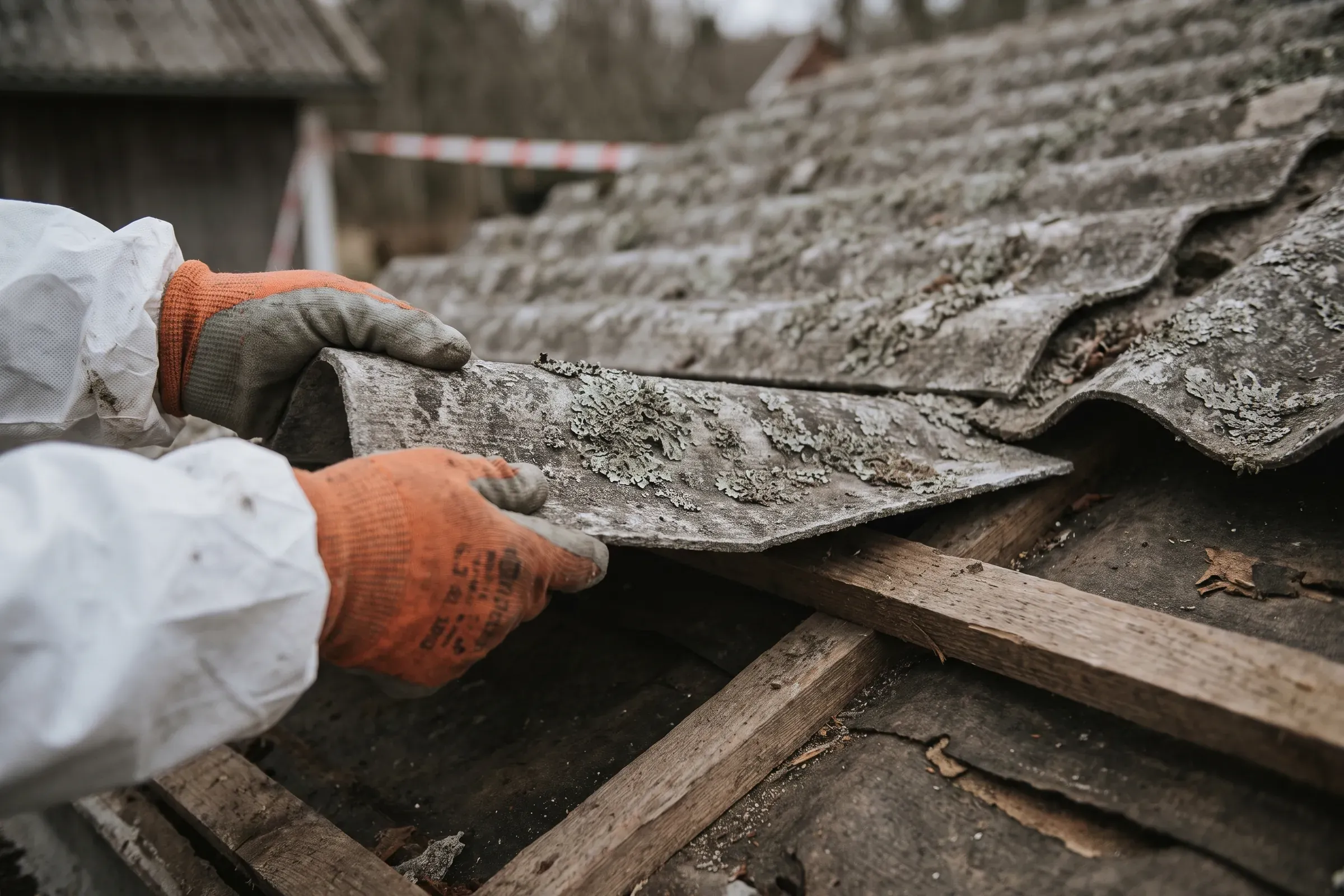
Asbestos and fibre-cement roofs
Removal of asbestos roof sheets, packed and delivered to an approved waste site. Learn more about Asbestos and fibre-cement roofs -
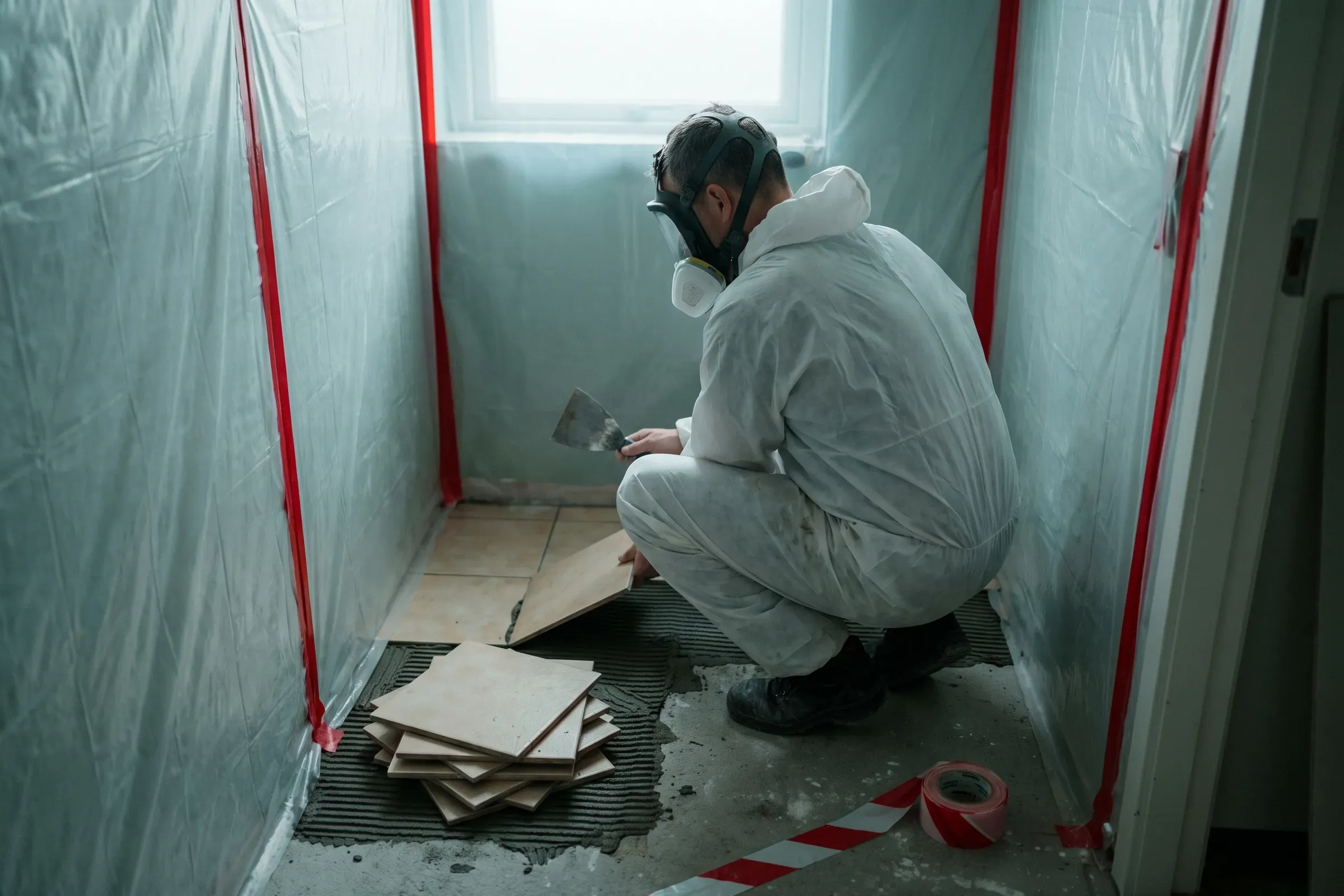
Tile adhesive and floors
Asbestos tile adhesive, vinyl and floor glue removed under negative pressure before your new floor goes in. Learn more about Tile adhesive and floors -
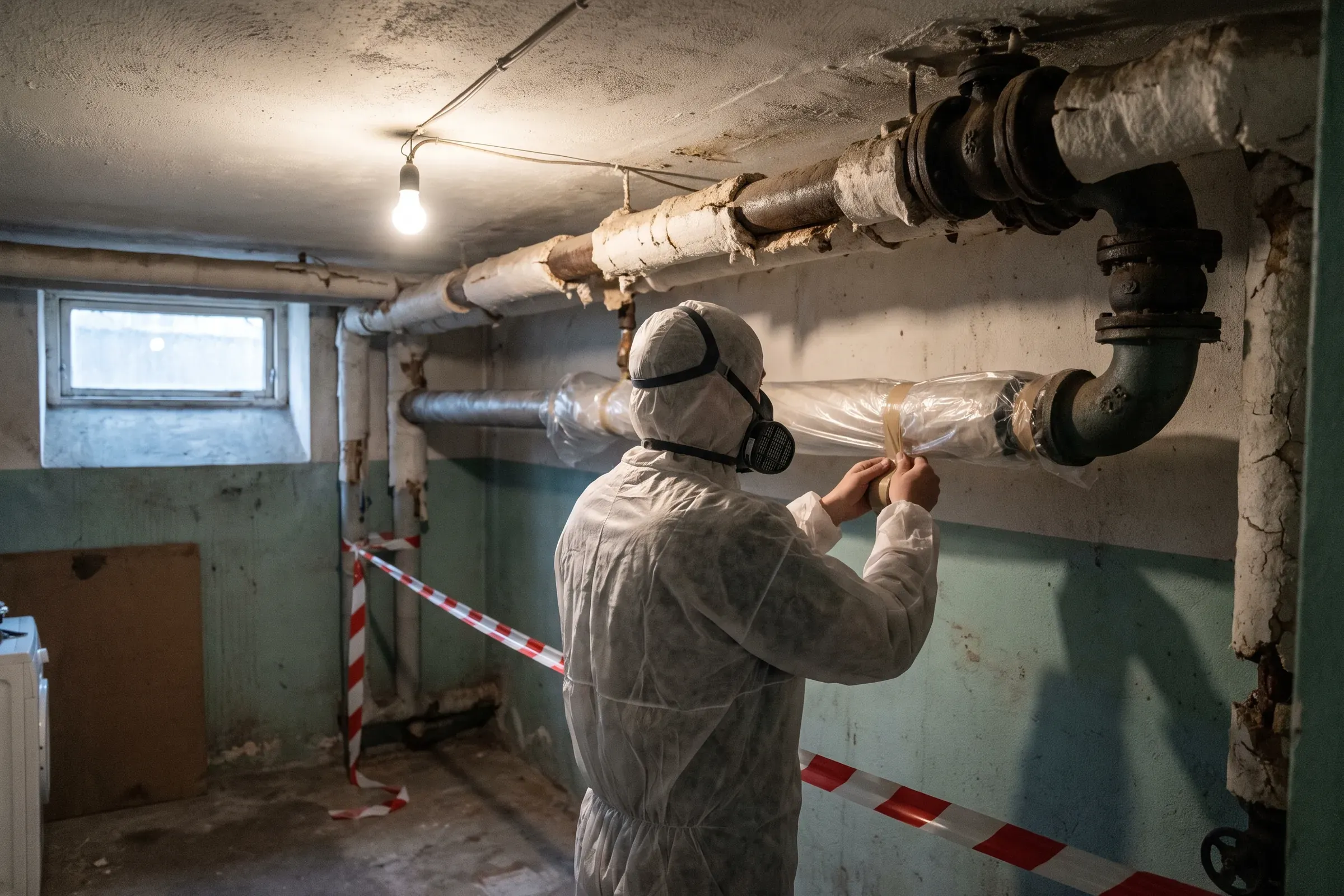
Pipe insulation
Asbestos pipe insulation in basements and plant rooms removed or encapsulated without spreading fibres. Learn more about Pipe insulation -
Asbestos survey
Sampling and laboratory analysis so you know what you have before you renovate. Learn more about Asbestos survey -
Business and housing associations
Environmental screening, notification, schedule and documentation for properties, contractors and the public sector. Learn more about Business and housing associations