Asbestos removal
Asbestos survey and asbestos test – sample and analysis
Asbestos survey and asbestos test with sampling and laboratory analysis: when to test, what we sample, what the report contains, and the difference between a visual check and an analysis.
What the price includes. What a quote from us always includes.
- Review of the materials your renovation goes into
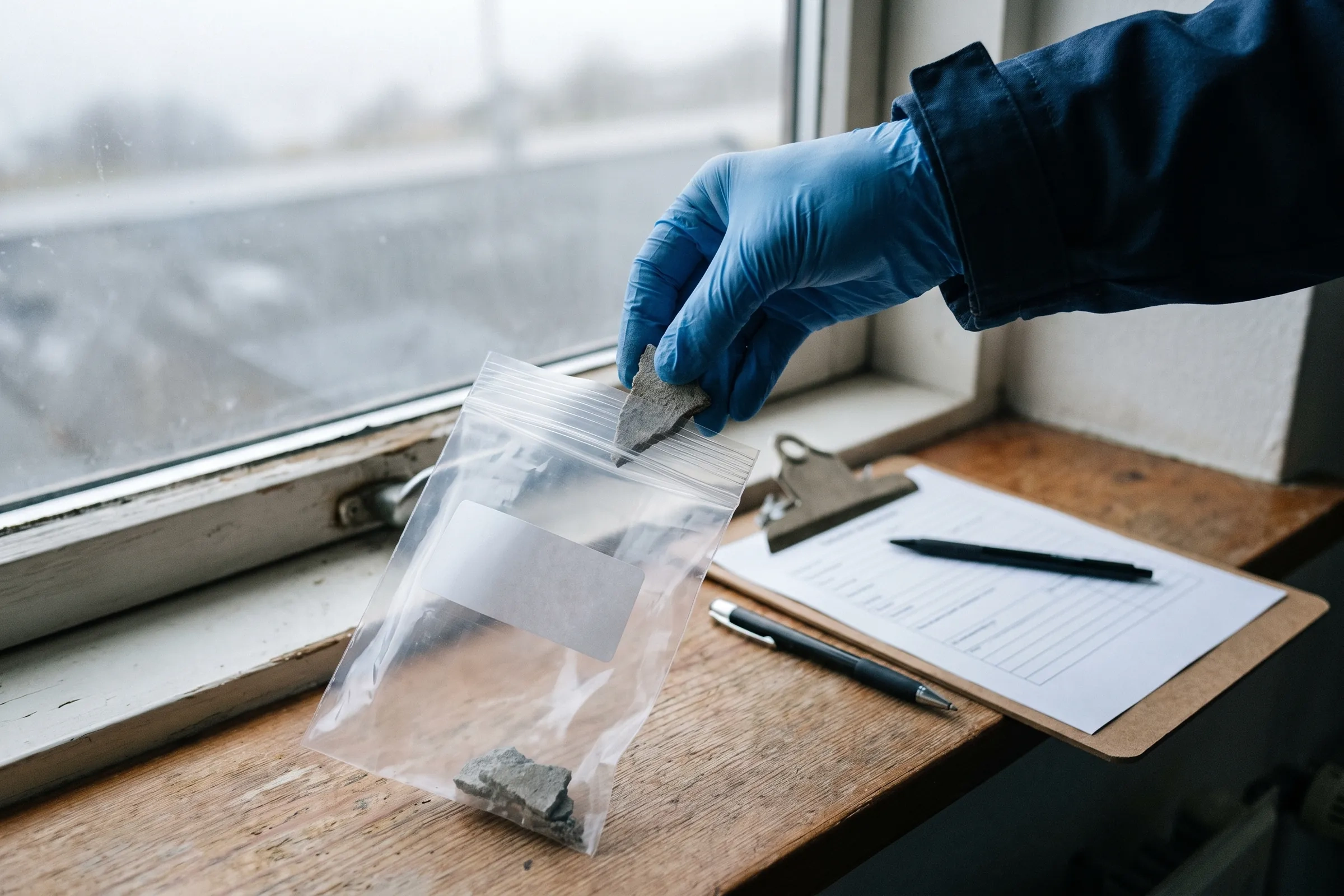
- Sampling with protective equipment and sealing of the sample spot
- Laboratory analysis
- Report with sample locations, results and recommendation
- Mapping of the extent if asbestos is found
- Guidance on the next step, whether that is removal or not
An asbestos survey answers the question everything else depends on: is there asbestos in the material you are about to touch? We sample the materials your project goes into, send them for laboratory analysis and collect the answers in a report you and your tradesperson can build on. Here you can read when to test, what we sample, the difference between a visual check and an analysis, and what you get in hand afterwards.
When should you test for asbestos?
The rule is simple: if you are going to demolish, sand, drill, scrape or remove a material in a building from before 1990, you should know whether it contains asbestos before you start. Asbestos was as a rule banned in construction in 1972, but with exemptions until 1986 indoors and 1990 outdoors; asbestos fibre-cement sheets were produced until 1988 and laid until around 1990. Asbestos sits in roofs, tile adhesive, ceiling boards, wall boards, pipe insulation, floor glue, vinyl, filler, sealant and roofing felt.
If you are only painting or hanging new wallpaper over the old, the material releases few fibres, and there is rarely any reason to test. If you are buying a house, a survey of the roof and bathroom can spare you a surprise after taking over.
Visual check or analysis: the difference
A visual check is when someone who knows the materials looks at age and year of construction and says: you should test this. It is a useful first step, but it is a suspicion, not an answer. Asbestos fibres cannot be seen with the naked eye, and materials with and without asbestos look the same. Photos and the year of construction can raise a suspicion, but they can never confirm it; only a laboratory analysis can. We never judge a material conclusively from a photo or a description.
An analysis is when a sample of the material is examined under a microscope at a laboratory. The answer is whether the sample contains asbestos, and which type. That is the answer the Danish Working Environment Authority, the municipality and your tradesperson can use.
What we sample
Corrugated fibre cement
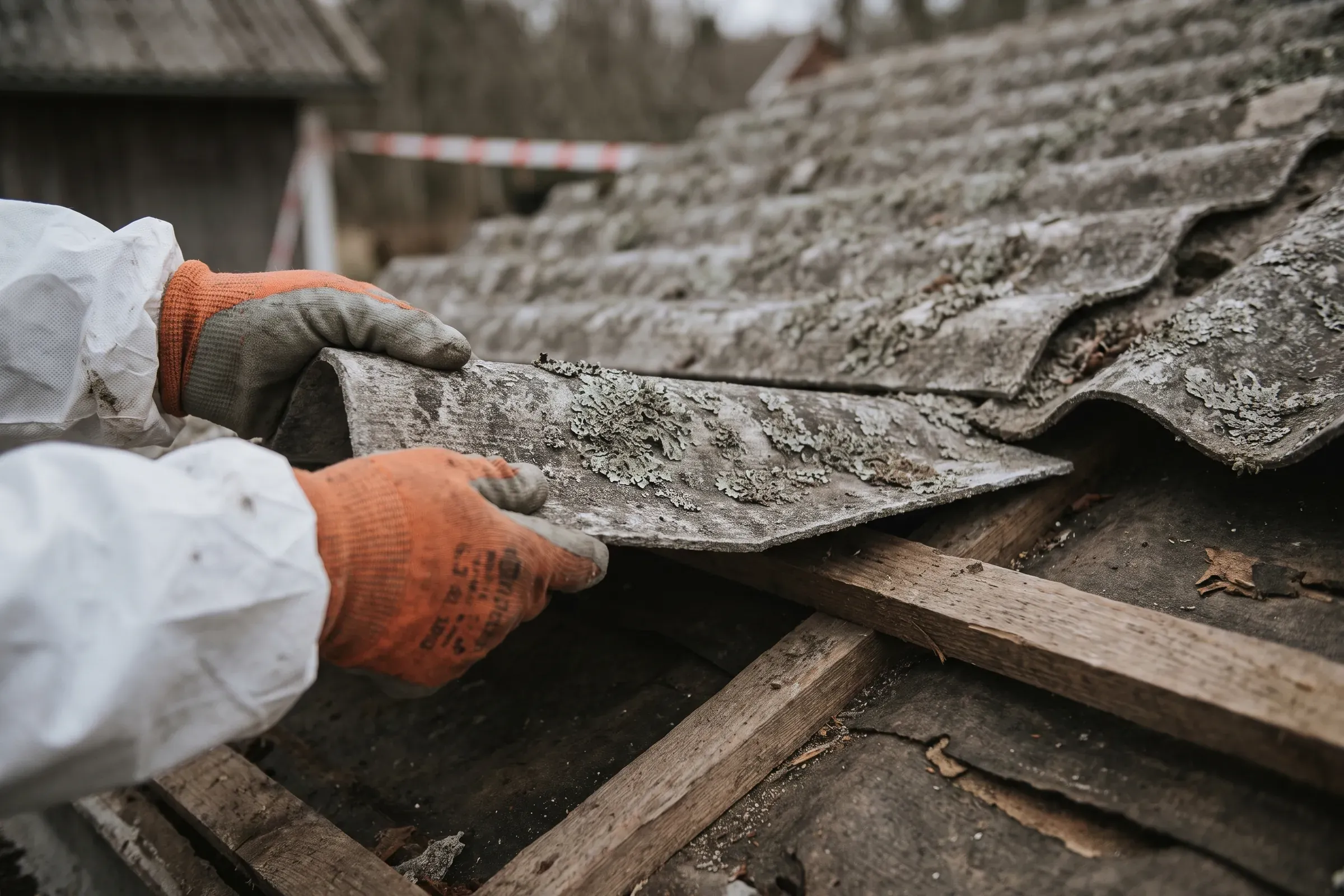
The grey, wavy roof on houses from before 1990. We take the sample from an edge or an already broken sheet, never by drilling into the roof. What happens if the answer is yes is on the page about asbestos roof removal.
Fibre-cement slates
Small, flat roof tiles, produced with asbestos until 1986. They break easily, so the sample is taken from a loose or already damaged slate. Removal is on the page about asbestos roof removal.
Tile adhesive and floors
Adhesive behind tiles, black glue under vinyl and the vinyl itself, typically from before 1980. The sample is taken from a joint or an edge before anyone knocks a tile loose. Read more about asbestos in tile adhesive and floors.
Pipe insulation and diatomite
The white, chalky insulation around heating pipes in basements and plant rooms. The sample is taken from a spot that is already damaged, and the spot is sealed afterwards. Read more about asbestos in pipe insulation.
Ceiling boards, render and filler
Soft, light ceiling boards from the 1950s to 70s, hard fibre-cement boards, and the layers behind the wallpaper. We take a small sample from an edge of every layer you plan to work in. Read more about asbestos in ceilings and walls.
Roofing felt
Older roofing felt and underlay could contain asbestos. The sample is taken from an edge at a flashing, without opening the roof. Disposal follows the same rules as roof sheets, see the page about asbestos roof removal.
Loft insulation
Loose insulation and wrapping around pipes and ducts in the loft from before 1980. The sample is taken where the material already lies exposed. Read more about asbestos in pipe insulation.
Asbestos cord and gaskets
Cord, gaskets and flange washers in boilers, hatches and old wood-burning stoves. Small quantities, but dusting when they crumble. Removal comes under asbestos in pipe insulation.
How the sampling works
We go through the building with you and agree which materials to test: the ones your project goes into, not the whole house, unless you ask for it. From each material we take a small sample from an edge or a spot that is already damaged, with protective equipment and tools that keep the dust in. The sample spot is sealed, the sample is packed and labelled, and it is sent for analysis. Samples of many materials in one day means one report and one price. Sampling in itself is not asbestos work that has to be notified to the Working Environment Authority; it is the removal that is notified.
Answer and report
The report shows where each sample was taken, with photo and location, what the laboratory found in it, and what it means for your project: whether the material can stay, whether it should be encapsulated, or whether it has to be removed before the work continues. If asbestos is found, we map the extent so a quote for removal, ours or anyone else’s, is based on what is actually in the building.
The report is yours. Your tradesperson needs it before the work starts, and it is the basis for the notification to the Working Environment Authority that a removal requires. A positive result goes straight into a quote for removal, if you want one, without a new walk-through.
What does an asbestos survey cost?
The price is set by the number of materials to be sampled, plus travel, and you get it in writing before we take the first sample. One sample of one material is the smallest job; a walk-through of the whole house before a purchase or a full renovation is a larger one, but samples taken on the same day are collected in one report and one price. What drives the price is on the pricing page.
Environmental screening before demolition and conversion
Before demolition, renovation or larger maintenance that affects more than 10 m² or produces more than 1 tonne of waste, you as the building owner must under the waste rules screen the building for problematic substances, map the finds and notify the waste to your municipality. Asbestos is one; lead in paint, PCB in sealants, chlorinated paraffins and heavy metals are the others. We do the asbestos part, help with the municipality’s waste notification and can coordinate with the consultant who takes the rest.
From survey to removal
If the samples show asbestos, you have a choice, not a problem. The report tells you what has to be removed and what can stay. If you want us to do it, you get a written quote after a site visit for exactly the extent the report shows. If you would rather have someone else do it, the report is just as usable there. What drives the price of removal is on the pricing page.
Where we work. North Jutland and Zealand.
We remove asbestos across North Jutland and Zealand. The towns below are the ones with a page of their own. If your town isn't listed, write to us anyway.
North Jutland · 22 towns
Zealand · 56 towns
North Jutland
Zealand
- Copenhagen
- Frederiksberg
- Hvidovre
- Ballerup
- Roskilde
- Helsingør
- Greve
- Næstved
- Brøndby
- Køge
- Taastrup
- Hillerød
- Slagelse
- Herlev
- Holbæk
- Albertslund
- Glostrup
- Hørsholm
- Ishøj
- Ølstykke-Stenløse
- Ringsted
- Birkerød
- Farum
- Vallensbæk
- Solrød Strand
- Hedehusene
- Frederikssund
- Lillerød
- Kalundborg
- Korsør
- Værløse
- Haslev
- Frederiksværk
- Dragør
- Vordingborg
- Jyllinge
- Smørumnedre
- Helsinge
- Humlebæk
- Fredensborg
- Nivå
- Hundested
- Sorø
- Slangerup
- Gilleleje
- Skælskør
- Hellebæk-Ålsgårde
- Tune
- Fensmark
- Hornbæk
- Nykøbing Sjælland
- Bagsværd
- Gentofte
- Gladsaxe
- Hellerup
- Kgs. Lyngby
When should I test for asbestos?
Before you demolish, sand, drill or remove materials in a building from before 1990. Roof, tile adhesive, ceiling boards, pipe insulation, floor glue, filler and sealant are the typical places. If you are only painting, there is rarely any reason to test.
Can you tell from a photo whether it is asbestos?
No, and nobody can. Asbestos fibres cannot be seen with the naked eye, and materials with and without asbestos look the same. A photo and the year of construction can raise a suspicion; only a laboratory analysis of a sample gives an answer.
How many samples have to be taken?
As a rule of thumb one per material and per type: the tile adhesive in the bathroom and the tile adhesive in the kitchen are two samples, and two kinds of ceiling board are two samples. We sample the materials your project goes into, not the whole house, unless you ask for it. The number is in the price before we come.
Can I take the sample myself?
Sampling is not demolition and does not require authorisation, so you may. If you do, wet the material, take a small piece from an edge wearing gloves, avoid drilling, sawing or sanding, and pack the sample in two sealed bags. We are happy to take it with equipment that keeps the dust in, and with a photo and location for the report.
What does an asbestos test cost?
It depends on the number of materials to be sampled and on the travel. You get the price in writing before we take the first sample, and samples of many materials in one day give one report and one price. What drives the price is on the pricing page.
Other services. Often put together in one quote.
-
Asbestos and fibre-cement roofs
Removal of asbestos roof sheets, packed and delivered to an approved waste site. Learn more about Asbestos and fibre-cement roofs -
Tile adhesive and floors
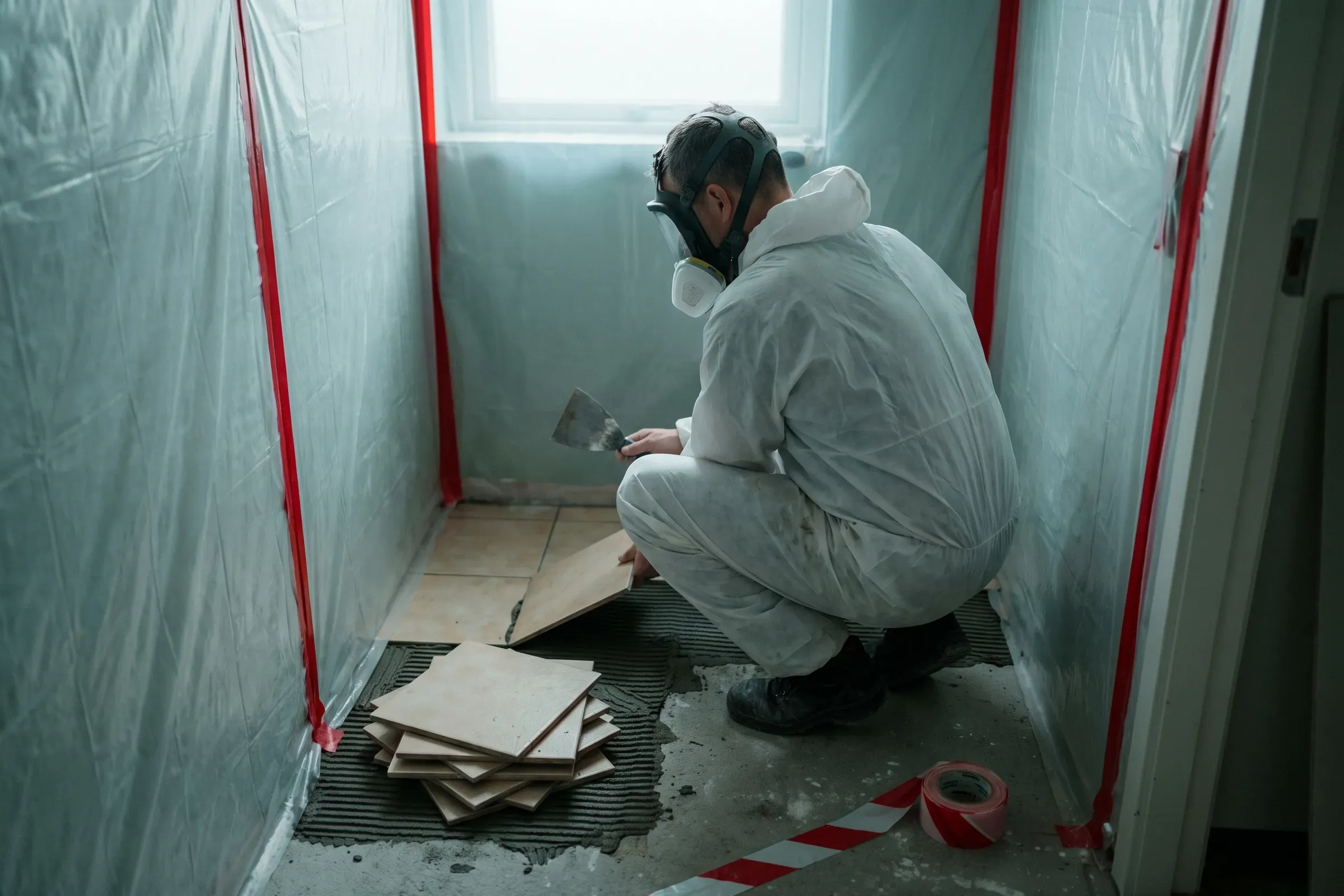
Asbestos tile adhesive, vinyl and floor glue removed under negative pressure before your new floor goes in. Learn more about Tile adhesive and floors -
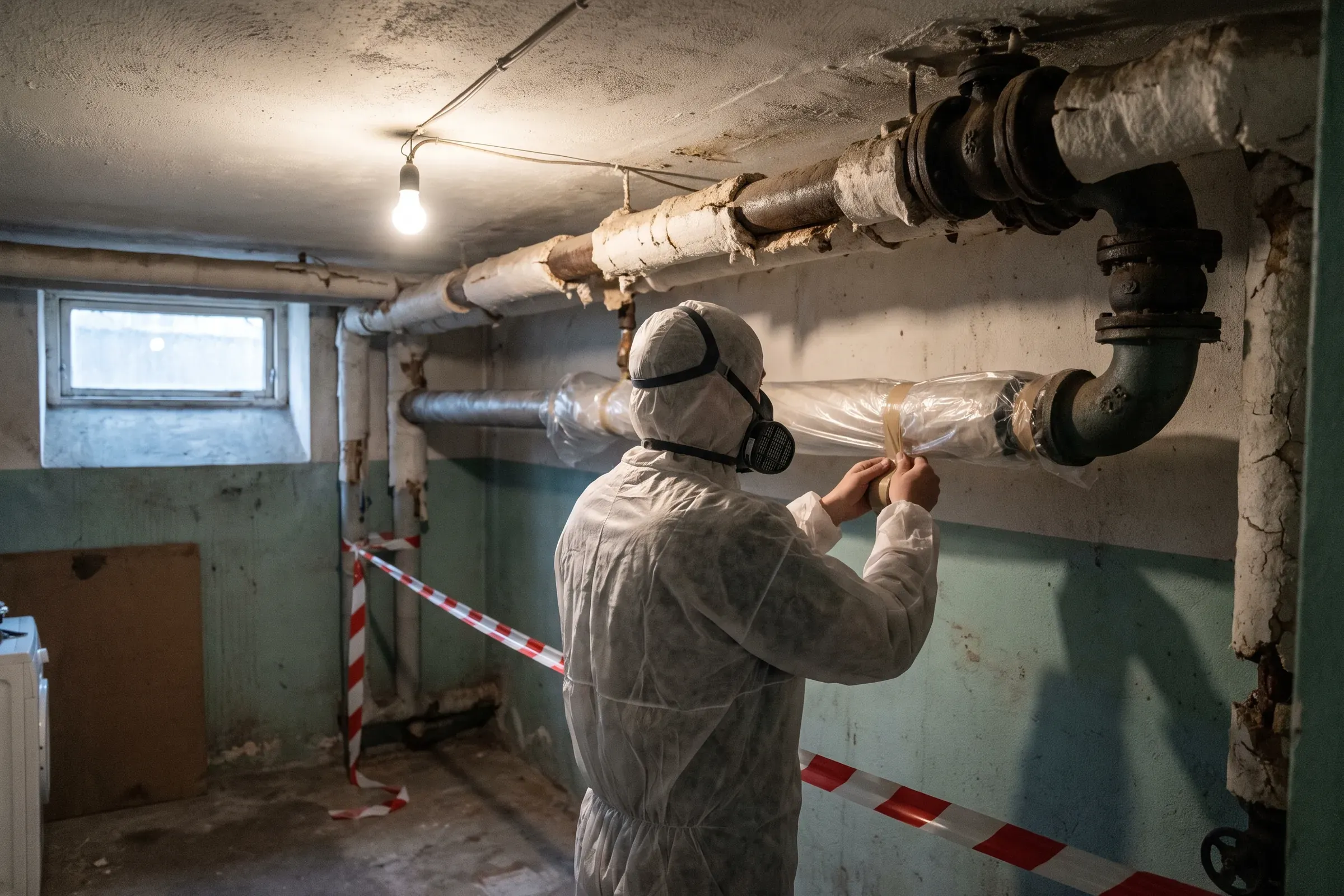
Pipe insulation
Asbestos pipe insulation in basements and plant rooms removed or encapsulated without spreading fibres. Learn more about Pipe insulation -
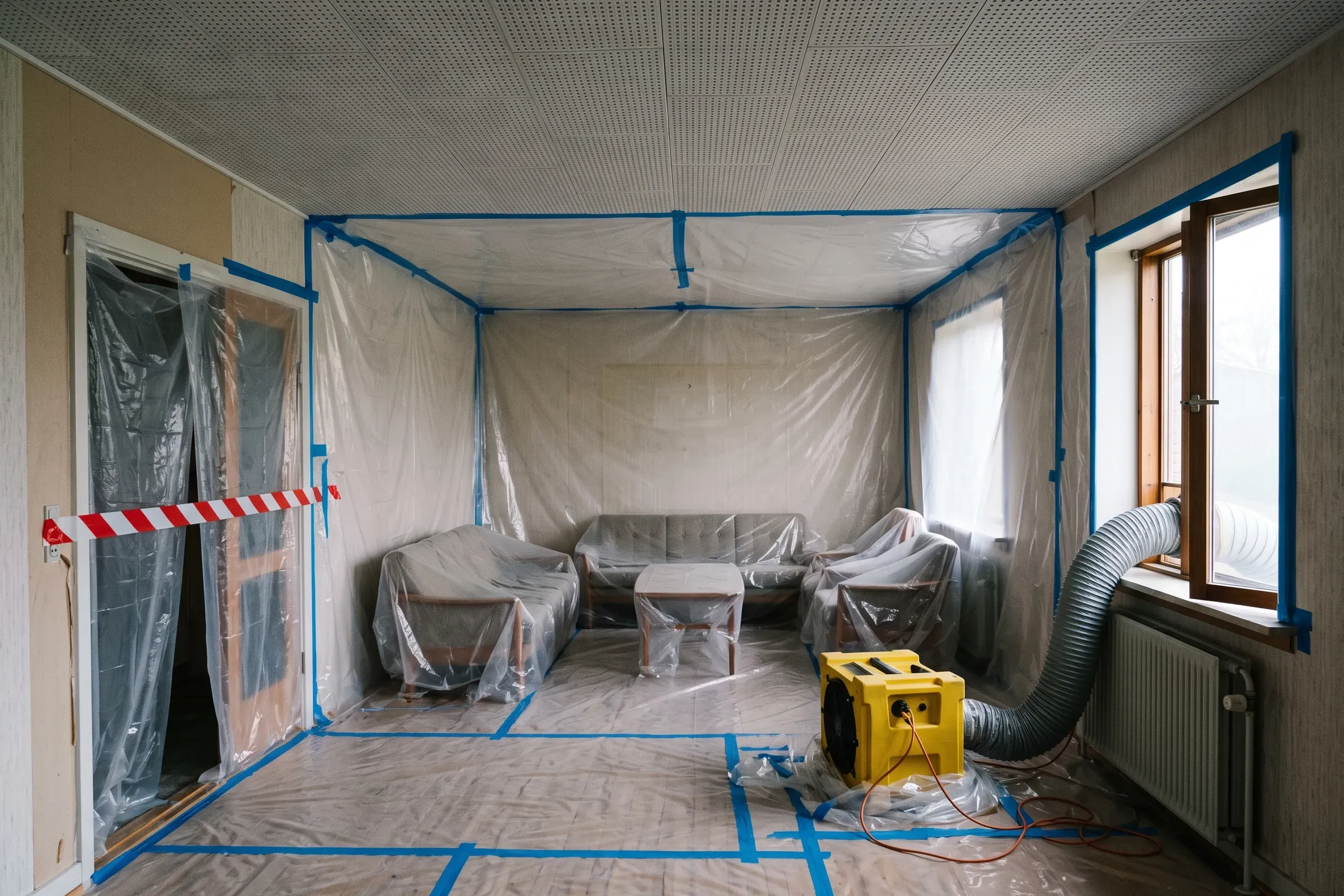
Ceilings and walls
Ceiling boards, wall boards and asbestos filler removed room by room under negative pressure. Learn more about Ceilings and walls -
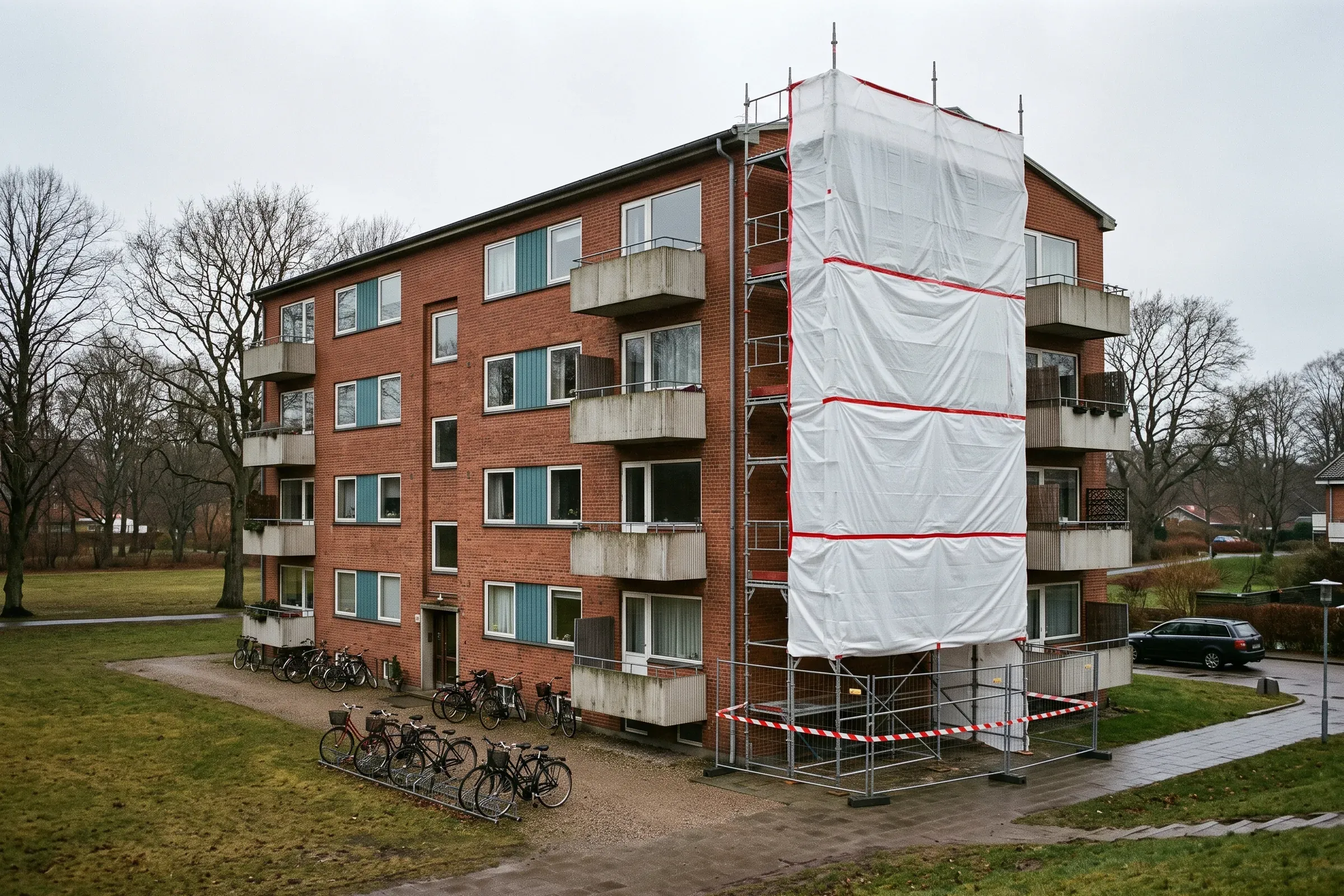
Business and housing associations
Environmental screening, notification, schedule and documentation for properties, contractors and the public sector. Learn more about Business and housing associations