Asbestos removal
Asbestos roof removal – price per m² and taking it down
Asbestos roof removal: calculate an indicative price per m² in two minutes, see whether your roof contains asbestos, what you may do yourself, and how we take it down and dispose of it.
What the price includes. What a quote from us always includes.
- Site visit and written quote
- Notification of the work to the Danish Working Environment Authority
- Cordoning off the work area and sheeting around the house
- Protective equipment and respirators for everyone on the roof
- Removal of whole sheets, with no cutting or sanding
- Packing in approved big bags or sealed plastic on pallets
- Transport to an approved waste site, with receipt
- Documentation of notification, disposal and the work carried out
An asbestos roof is a fibre-cement roof laid before around 1990, when the sheets were cast with asbestos fibres in the cement. As long as the sheets lie whole and untouched, they release few fibres. The problem comes when the roof has to come down: broken sheets, drilling and pressure washing send asbestos dust into the air. That is why asbestos roof removal is now a job that requires an authorisation, and why this page gives you both an indicative price per m² and a description of how the removal works.
How do you know whether your roof contains asbestos?
Was your roof laid before 1990? Then assume it may contain asbestos until a sample shows otherwise. Asbestos fibre-cement sheets were produced in Denmark until 1988, and remaining stock was laid on roofs until around 1990. If the roof was laid after 1990, the sheets were as a rule made without asbestos, but a roof can have been relaid with old sheets, and the year of construction doesn’t tell the whole story.
Turn a sheet over, or look at the underside from the loft. Many fibre-cement sheets carry a stamped number. If the sheet has an 8-digit number starting with 4 or 5, or a number containing letters, it was made without asbestos. If it has 5–7 digits and no letters, it as a rule contains asbestos. Foreign sheets cannot be identified from the number, and the number is an indication, not proof. If there is no number, or you are in doubt, an asbestos sample is the only sure way to get an answer. We take the sample and send it for analysis; what an analysis includes is on the page about the asbestos survey. We never judge a roof from a photo.
Fibre-cement slates are the same story as corrugated sheets. The small, flat slates were produced with asbestos until 1986, and they break more easily than corrugated sheets when taken down.
Can you take an asbestos roof down yourself?
No. Since 1 January 2025, demolition of asbestos-containing material requires an authorisation, and that includes a whole roof on a private house. The exception is brief demolition work of a minor nature: the Working Environment Authority’s example is 4–6 roof sheets taken down for one roof window. You may still do that yourself, but the rules on dust, protective equipment and waste apply there too: the sheets must not be broken, cut or sanded, and they must be sealed in plastic and delivered as your municipality directs. A whole roof may not be split into small jobs to avoid authorisation.
Since 21 December 2025, everyone who works with asbestos must also hold the occupational health and safety training that the Danish Working Environment Authority requires. Our people have it. The work is notified to the Working Environment Authority before we start, and you get a copy of the notification.
If you get a tradesperson without an authorisation to take the roof down, the dust ends up in your garden, in your gutters and at your neighbour’s. Ask who the authorised responsible professional for the work is before you sign. What you may do yourself, and what still applies when you do, is in the guide to the asbestos rules.
How we remove an asbestos roof, step by step
- Site visit. We look at the roof, the access, the ground and where the waste can stand. If there is doubt about asbestos, we take a sample. You get a written quote describing exactly the work that is included.
- Notification and planning. The work is notified to the Working Environment Authority, and we help with the waste notification to the municipality that you must file as the building owner. We agree a date with you and with the roofing company fitting the new roof, so the house is not open longer than necessary.
- Cordoning and sheeting. The area around the house is cordoned off, and the ground below the eaves is covered so fallen fragments can be collected instead of ending up in the flower beds.
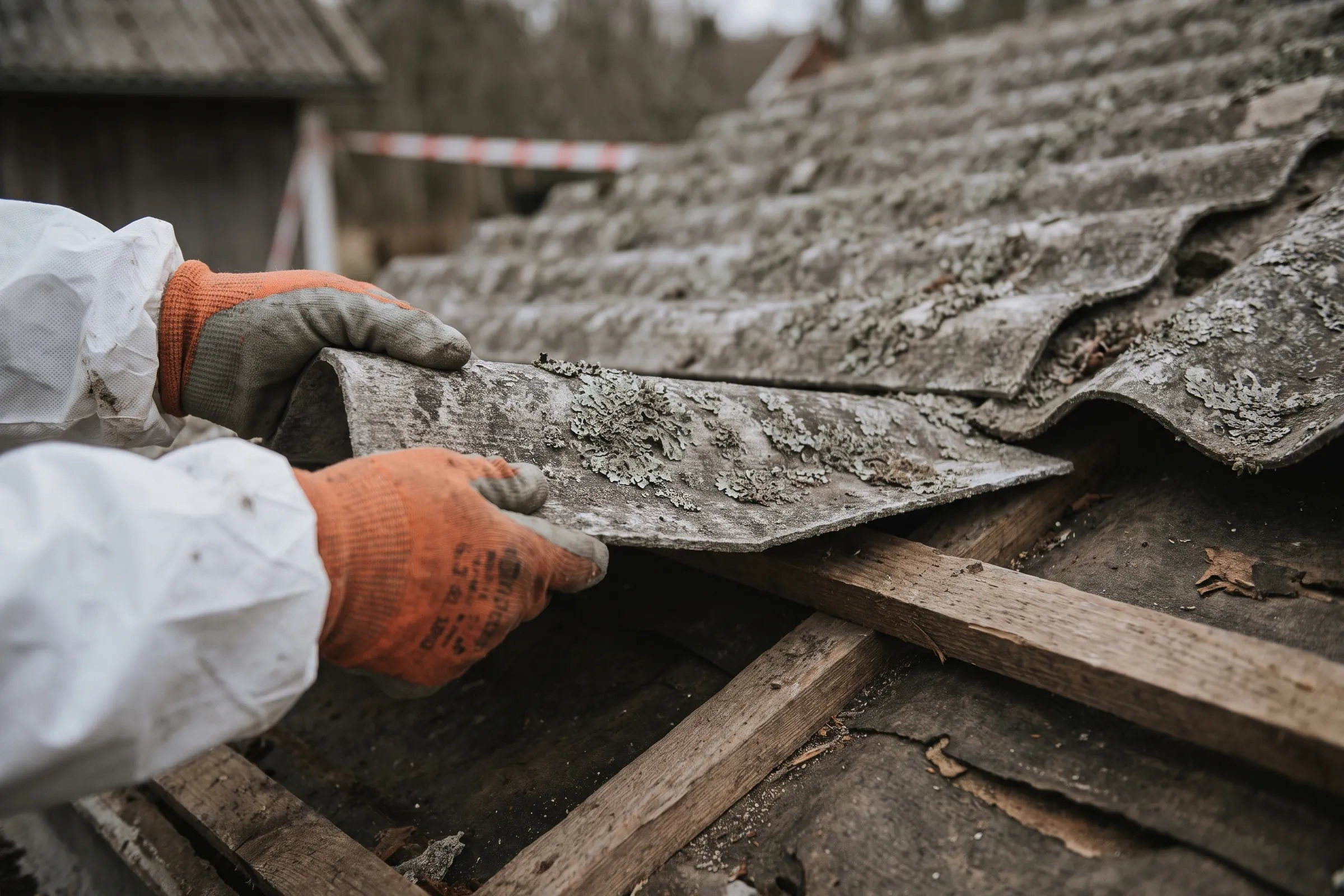
- Removal. The sheets are wetted and lifted off the roof whole. Screws and hooks are removed so the sheets don’t break. Nothing is cut, sanded or drilled in asbestos sheets, and they are not thrown down.
- Packing and transport. The sheets are packed on pallets in sealed plastic or in approved big bags, labelled and taken to an approved waste site. You get the receipt.
- Cleaning and documentation. Battens, gutters and the ground around the house are checked for residue. You get documentation of notification, disposal and the work carried out, which you can pass on to your roofer, your insurer and a future buyer.
What does it cost to remove an asbestos roof?
The price is a fixed rate per square metre of roof area, and the rate depends on the roof type: corrugated sheets or fibre-cement slates. Disposal is in the rate. Scaffolding is not in the price unless otherwise agreed; it is priced separately in the quote. A roof so brittle that the sheets break when touched is something we see at the site visit.
The calculator at the top of the page gives you an indicative price in two minutes from roof type and square metres, without you giving a name or phone number. The price covers notification, sheeting, removal, packing, transport to an approved waste site and the landfill fee; a new roof and scaffolding are not included. The pricing page says more about what drives the price and shows a worked example. You get the final quote after a site visit, and it only changes if the job changes.
There is currently no grant scheme for removing asbestos roofs, and the craftsman deduction does not cover the removal. What applies, and what has been proposed, is in the guide to grants.
Corrugated sheets or fibre-cement slates? It changes the price
Corrugated sheets are large and few: one sheet covers around a square metre, and it is lifted off in one piece once the screws are out. Fibre-cement slates sit in many small pieces, each of which has to be loosened, kept whole and packed, and which break more easily. So slates take longer per square metre and sit higher in price. Choose the roof type in the calculator’s first step so it uses the right rate; if you don’t know which type you have, choose “Other / don’t know”, and we arrange a site visit.
New roof on top, or replacement?
There is no ban on laying a new, light roof on top of an asbestos roof, for example a steel roof on spacer battens, and some choose it to save the removal. The condition is that the old sheets are not drilled, cut or damaged during fitting, and that the structure can carry two roofs; ask your municipality before you decide. It also has a price later: the asbestos is still there, it should be disclosed the day you sell, and the day the roof comes down anyway, both layers have to be handled. We usually recommend replacement, but we don’t fit roofs, so the advice is independent of what you choose.
Cleaning and painting an asbestos roof is regulated, and we don’t do it. Pressure washing asbestos sheets is banned, and the exemptions professional roof cleaners held lapsed on 1 July 2026. What remains is cleaning with a soft brush and ordinary water pressure, which for a company is still asbestos work that must be notified and done by trained people. Paint does not remove the asbestos. If the roof is brittle or leaking, it is time to replace it. The rules on cleaning are in the guide to the asbestos rules.
Disposal of an asbestos roof
Asbestos waste must be sorted out and landfilled separately, and it may only be delivered to an approved waste site. Dusting asbestos waste counts as hazardous waste; whole, packed sheets do not, but the rules on packing and labelling apply regardless. Whole sheets are packed in sealed plastic on pallets or in labelled big bags; dust and small pieces are collected in closed, sealed bags. The waste must not be mixed with other building waste, and the sheets must not be broken, cut or crushed to take up less space: the rules require methods that raise as little dust as possible, and dusting waste must be wetted. As a private person you can deliver small amounts of correctly packed asbestos as your municipality directs. A whole roof we transport ourselves — the disposal is in the per-m² price — and the receipt from the waste site is part of your documentation.
Before the roof comes down, you as the building owner must notify the building waste to your municipality when the work affects more than 10 m² or produces more than 1 tonne of waste, and a whole roof does. That notification is separate from our notification to the Working Environment Authority and is filed in your name. We help with the figures on quantity and waste type.
Where we work. North Jutland and Zealand.
We remove asbestos across North Jutland and Zealand. The towns below are the ones with a page of their own. If your town isn't listed, write to us anyway.
North Jutland · 22 towns
Zealand · 56 towns
North Jutland
Zealand
- Copenhagen
- Frederiksberg
- Hvidovre
- Ballerup
- Roskilde
- Helsingør
- Greve
- Næstved
- Brøndby
- Køge
- Taastrup
- Hillerød
- Slagelse
- Herlev
- Holbæk
- Albertslund
- Glostrup
- Hørsholm
- Ishøj
- Ølstykke-Stenløse
- Ringsted
- Birkerød
- Farum
- Vallensbæk
- Solrød Strand
- Hedehusene
- Frederikssund
- Lillerød
- Kalundborg
- Korsør
- Værløse
- Haslev
- Frederiksværk
- Dragør
- Vordingborg
- Jyllinge
- Smørumnedre
- Helsinge
- Humlebæk
- Fredensborg
- Nivå
- Hundested
- Sorø
- Slangerup
- Gilleleje
- Skælskør
- Hellebæk-Ålsgårde
- Tune
- Fensmark
- Hornbæk
- Nykøbing Sjælland
- Bagsværd
- Gentofte
- Gladsaxe
- Hellerup
- Kgs. Lyngby
What does it cost to remove an asbestos roof?
Indicatively from DKK 385/m² incl. VAT (DKK 308/m² excl. VAT). The price is a fixed rate per m² of roof area that depends on the roof type, and disposal is included. Use the calculator on this page, or get a fixed quote after a site visit. Scaffolding and a new roof are not included. Indicative price – final quote after assessment.
Can I take my asbestos roof down myself?
No. Since 1 January 2025, demolition of asbestos-containing material requires an authorisation, including on a private house. The exception is brief demolition work of a minor nature: the Working Environment Authority's example is 4–6 roof sheets taken down for one roof window. You may do that yourself, but without cutting or sanding, and the waste must be sealed and delivered as your municipality directs. A whole roof may not be split into small jobs to avoid authorisation.
Can you fit a new roof at the same time as the old one comes down?
We take the asbestos roof down and hand over battens and rafters cleared of asbestos waste. The new roof is fitted by your roofing company or carpenter, and we coordinate the date with them so the house is not open longer than necessary. The new roof is not part of our quote, so our advice on replacing or not is independent of your choice.
Is disposal included in the price?
Yes. Packing, labelling, transport to an approved waste site, the landfill fee and the receipt from it are in the per-m² price, together with sheeting, protective equipment, notification and documentation. What is not included is scaffolding, a new roof and reinstating battens and underlay.
How long does it take to remove an asbestos roof?
It depends on the roof area, the scaffolding and the weather; a small shed and a long farmhouse are not the same job. You get a schedule in the quote, and we agree the date with whoever is fitting the new roof.
Other services. Often put together in one quote.
-
Tile adhesive and floors
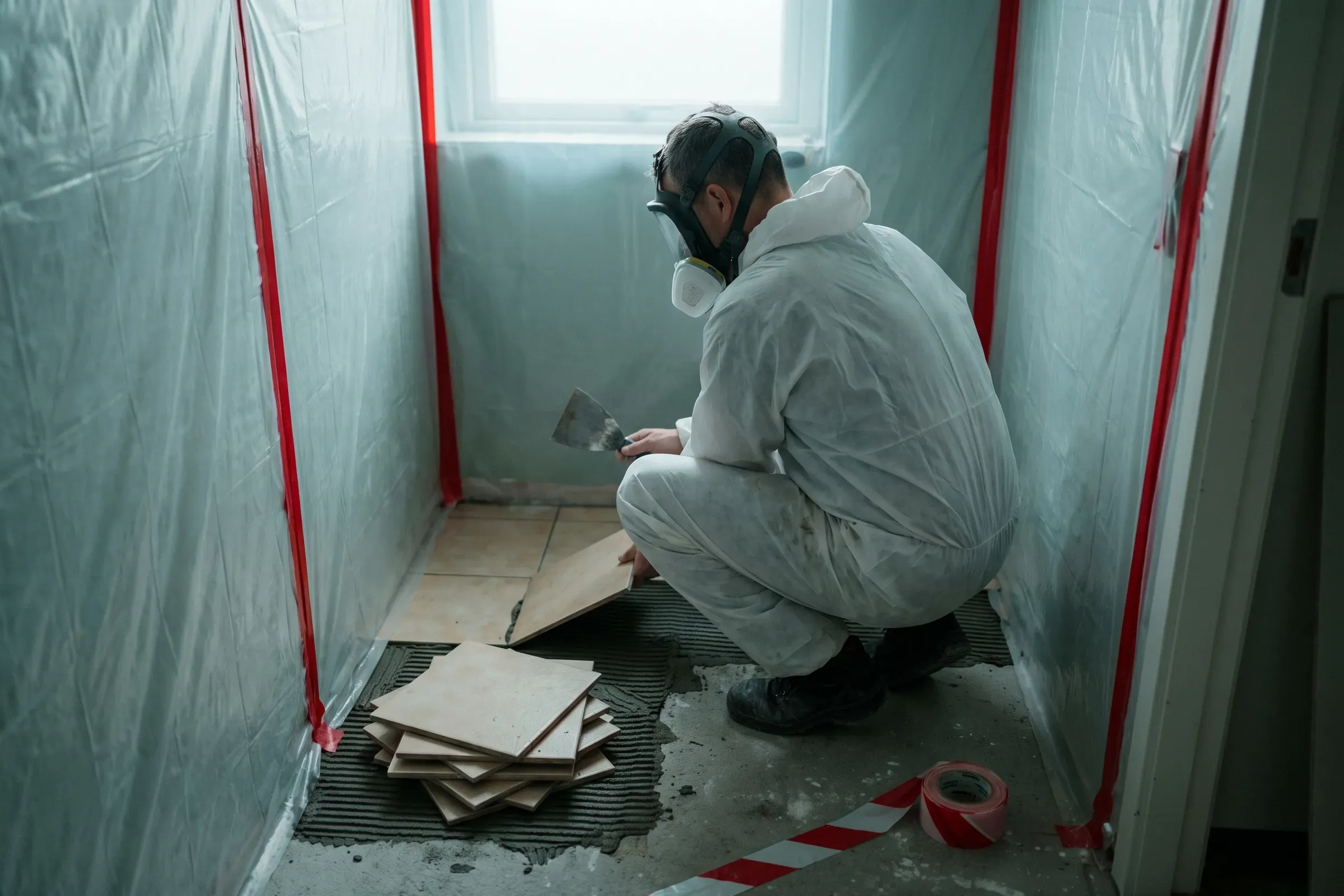
Asbestos tile adhesive, vinyl and floor glue removed under negative pressure before your new floor goes in. Learn more about Tile adhesive and floors -
Pipe insulation
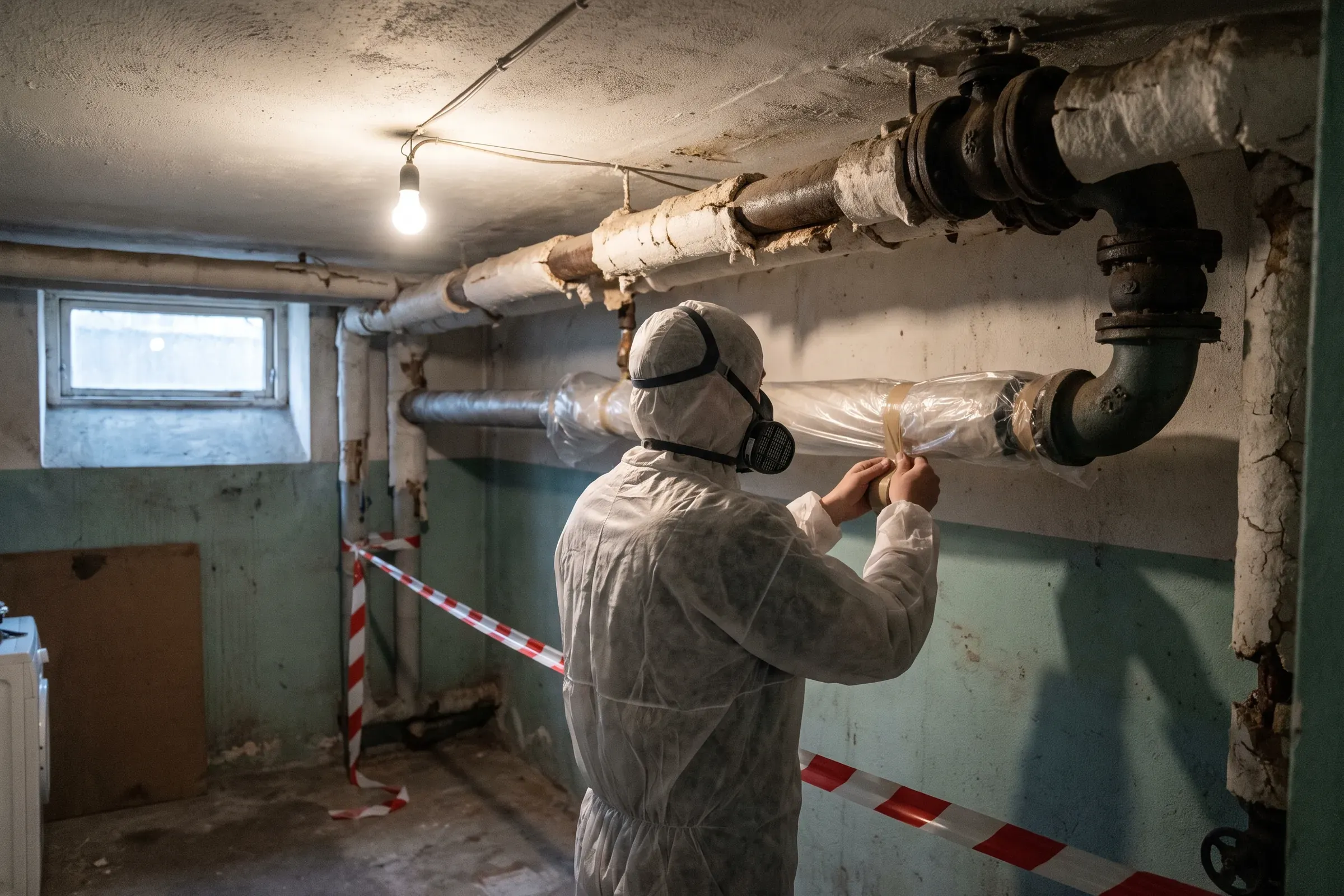
Asbestos pipe insulation in basements and plant rooms removed or encapsulated without spreading fibres. Learn more about Pipe insulation -
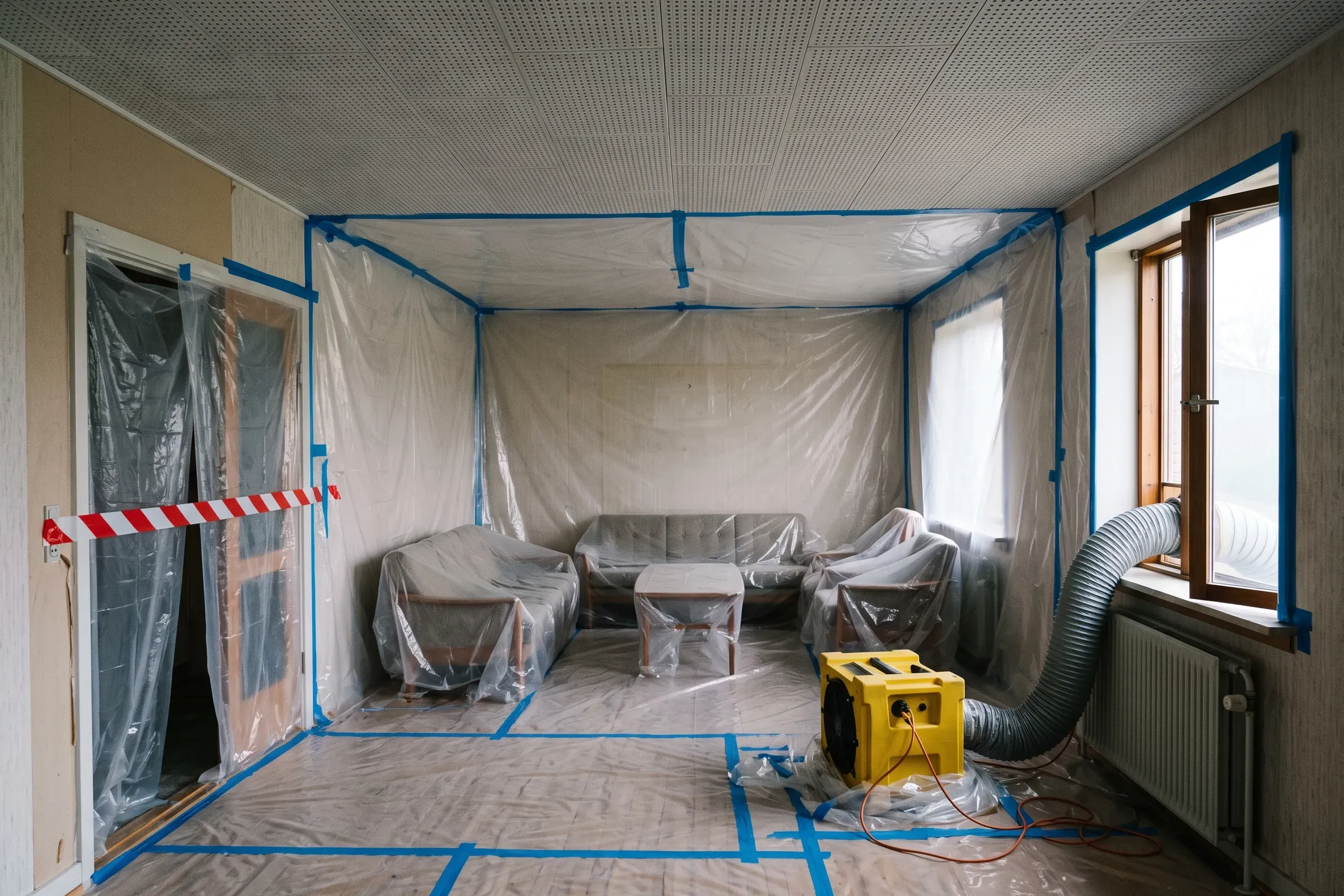
Ceilings and walls
Ceiling boards, wall boards and asbestos filler removed room by room under negative pressure. Learn more about Ceilings and walls -
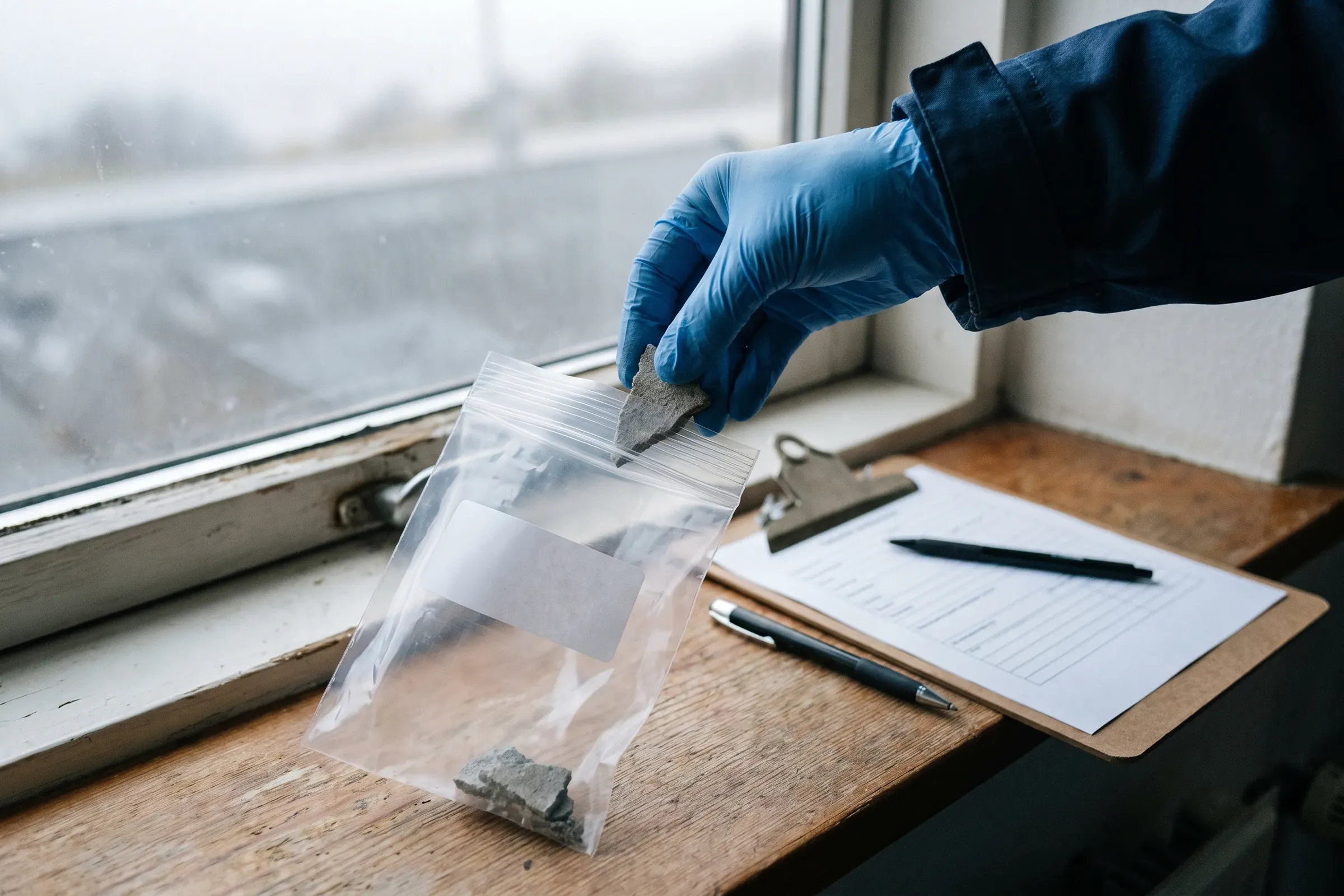
Asbestos survey
Sampling and laboratory analysis so you know what you have before you renovate. Learn more about Asbestos survey -
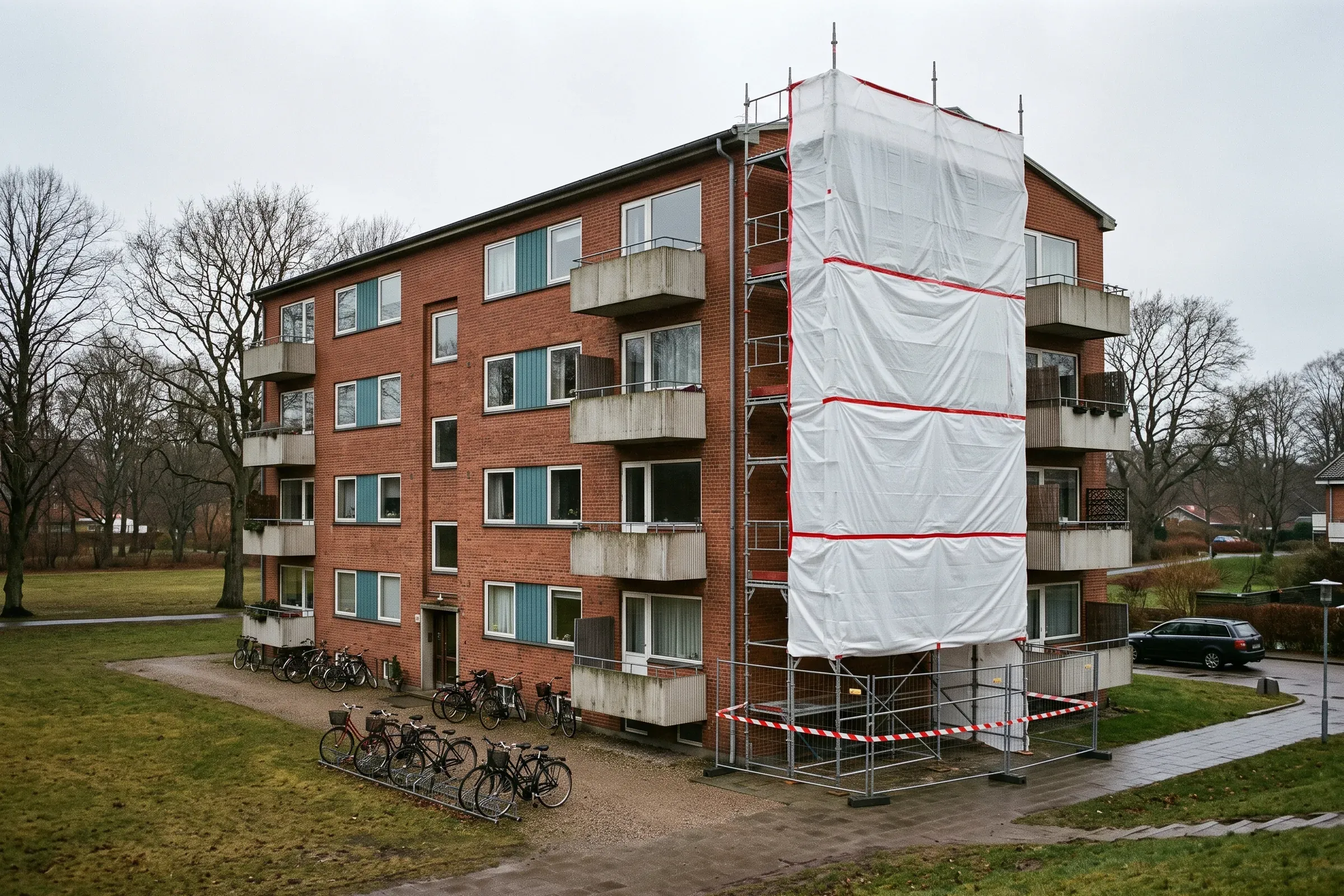
Business and housing associations
Environmental screening, notification, schedule and documentation for properties, contractors and the public sector. Learn more about Business and housing associations