Asbestos removal
Asbestos in pipe insulation – diatomite, testing and removal
Asbestos in pipe insulation and diatomite lagging: what it looks like, why it must not be disturbed, what to do now, when encapsulation is enough, and how we remove it from basements and plant rooms.
What the price includes. What a quote from us always includes.
- Site visit of the pipe runs and sampling with analysis
- Notification of the work to the Danish Working Environment Authority
- Sealing the basement or plant room with an airlock and negative pressure
- Protective equipment and respirators
- Removal or encapsulation of the asbestos insulation
- Packing in closed, labelled bags and transport to an approved waste site
- Cleaning, clearance measurement by agreement and documentation
Asbestos in pipe insulation is one of those things you discover when the plumber looks at the heating pipes in the basement and takes a step back. The white, chalky mass around the pipes in buildings from before 1972, and to a lesser extent until around 1980, often contains asbestos, and it should not be replaced with a knife and a bin bag. Here you can read how to recognise it, why it should stay put until it has been tested, what you may do yourself, and how we remove it from basements and plant rooms.
Where do you find asbestos in pipe insulation?
Asbestos was used to insulate heating and steam systems because the fibres withstand heat. In Denmark, asbestos for insulation was banned in 1972, so it is mainly buildings from before then you need to watch, and to a lesser extent buildings until around 1980: apartment blocks with central heating, older villas with oil boilers, schools, institutions and industrial buildings. The insulation sits around pipe runs in basements and plant rooms, around valves and bends, around boilers and hot-water tanks, as insulation in lofts and shafts, and sometimes under floors where nobody has looked at it for decades. Asbestos cord and gaskets in boilers, hatches and flanges belong to the same family.
What does asbestos pipe insulation look like?
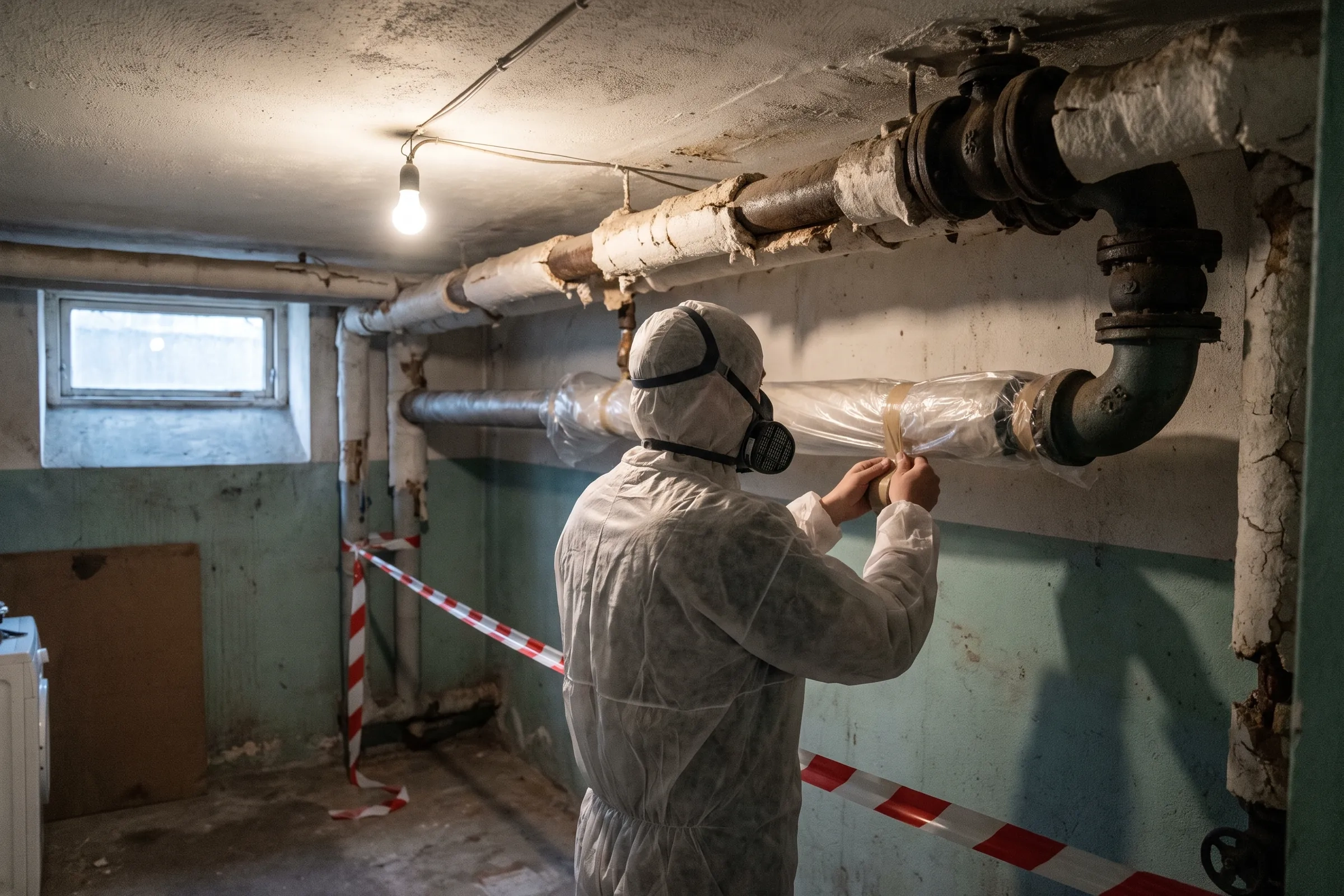
The typical picture is diatomite insulation: a white or greyish-white mass applied to the pipes in layers and wrapped in gauze, canvas or a hard shell of plaster. The surface is often painted. At bends and valves it was shaped by hand, and that is where it breaks first. Cardboard and wrapped insulation from the same period can also contain asbestos, and so can gaskets and cord.
The look gives a suspicion, not an answer. Diatomite without asbestos exists too, and we cannot tell the difference by looking. We take a sample with the right equipment, seal the spot and send the sample for analysis. What an analysis includes is on the page about the asbestos survey.
Don’t touch it: why the insulation must not be disturbed
As long as the insulation is intact, it releases few fibres. Pipe insulation, on the other hand, is among the materials that release the most fibres when disturbed, because the asbestos is loosely bound in a soft mass. A tradesperson cutting a piece off to reach a valve, a moving box pushed against the pipe, or a damaged end shedding onto the floor are the typical ways the fibres get into the room.
If you have damaged insulation, leave it, close off the room, and don’t sweep or vacuum with an ordinary vacuum cleaner. Then call us. We take the sample, secure the spot and tell you what the next step is.
What do you do now?
- Leave the insulation in place. Don’t touch it, don’t cut into it, and don’t set a plumber to work replacing pipes until you know what is on them.
- Have a sample taken. We take the sample from a spot that is already damaged, or from an edge, seal the spot and send it for analysis. You get the answer in writing.
- Decide from the answer and the condition. If the insulation is intact and out of daily traffic, encapsulation may be enough. If the pipes are being replaced or the insulation is damaged, it has to be removed. You get a fixed quote after a site visit, and what drives the price is on the pricing page.
- The removal. We seal the run, work under negative pressure and release the zone once it is cleaned and, by agreement, measured.
Can you remove pipe insulation with asbestos yourself?
As a rule, no. Since 1 January 2025, demolition of asbestos-containing material requires an authorisation. The exception is brief demolition work of a minor nature, and the Working Environment Authority’s example is 1–2 pipe bends taken down whole without cutting into the insulation. If the insulation has to be cut to get it off the pipe, the work requires authorisation, however small the piece. If you take a pipe bend down yourself, the rules on dust and waste still apply: wet the material, pack it in sealed, labelled packaging, and deliver it as your municipality directs.
A whole pipe run in the basement is not a small job, and a job may not be split into small ones to avoid authorisation. What you may do yourself, and what still applies when you do, is in the guide to the asbestos rules.
Encapsulation or removal?
There are two routes. Removal is the right one when the pipes are being replaced anyway, when the insulation is damaged, or when the room is going to be used for something where people move close to the pipes. Encapsulation is an option when the insulation is intact, the pipes are staying, and the spot is out of daily traffic. With encapsulation we seal the insulation so it cannot shed, and label it so the next tradesperson knows what is underneath.
Encapsulation does not remove the asbestos. It has to go into the building’s documentation, and the day the pipes are replaced, the insulation has to be removed anyway. We advise based on condition, location and what you need the room for, not on what gives us the most work.
Basements, plant rooms and housing associations
Basements and plant rooms are cramped, poorly ventilated and full of installations that need to stay dry and keep working. We seal the run with an airlock and negative pressure so air only flows into the zone and out through a filter, and we plan the work so heating and water are only off while we work on that particular run.
In a housing association that means residents are told when the heating will be off, and that common rooms, the laundry and the bike cellar can be used again as soon as the zone is released. Removal across many stairwells we plan in stages.
How we remove pipe insulation
The work is notified to the Danish Working Environment Authority before we start, and everyone working in the zone wears a respirator and a suit. The insulation is wetted and removed in pieces that go straight into closed, labelled bags, which are taken to an approved waste site. The pipes are cleaned, the zone is cleaned with an asbestos vacuum, and by agreement we take a clearance measurement of the air before the room is released. You get documentation of notification, disposal, any measurement and the work carried out.
Disposal of pipe insulation with asbestos
Removed pipe insulation is dusting asbestos waste and counts as hazardous waste. It is wetted, packed in double, sealed packaging inside the zone, labelled “asbestos” and taken to the approved waste site the municipality directs, separate from all other building waste. You get the receipt from the waste site as part of the documentation. If the work produces more than 1 tonne of waste or affects more than 10 m², you as the building owner must also notify the building waste to your municipality; we help with the figures.
What does it cost to remove asbestos in pipe insulation?
Three things decide the price: the number of metres of pipe, how cramped it is around them, and whether the insulation is removed or encapsulated. A single basement run with room to work is the smallest job; risers through several floors, boiler rooms with many valves and bends, or insulation in shafts and lofts are larger ones. Sealing, negative pressure, disposal and documentation are always included.
We give a fixed written quote after a site visit, and the price in the quote is the price on the invoice. What drives the price of indoor removal, and what a quote always includes, is on the pricing page.
Where we work. North Jutland and Zealand.
We remove asbestos across North Jutland and Zealand. The towns below are the ones with a page of their own. If your town isn't listed, write to us anyway.
North Jutland · 22 towns
Zealand · 56 towns
North Jutland
Zealand
- Copenhagen
- Frederiksberg
- Hvidovre
- Ballerup
- Roskilde
- Helsingør
- Greve
- Næstved
- Brøndby
- Køge
- Taastrup
- Hillerød
- Slagelse
- Herlev
- Holbæk
- Albertslund
- Glostrup
- Hørsholm
- Ishøj
- Ølstykke-Stenløse
- Ringsted
- Birkerød
- Farum
- Vallensbæk
- Solrød Strand
- Hedehusene
- Frederikssund
- Lillerød
- Kalundborg
- Korsør
- Værløse
- Haslev
- Frederiksværk
- Dragør
- Vordingborg
- Jyllinge
- Smørumnedre
- Helsinge
- Humlebæk
- Fredensborg
- Nivå
- Hundested
- Sorø
- Slangerup
- Gilleleje
- Skælskør
- Hellebæk-Ålsgårde
- Tune
- Fensmark
- Hornbæk
- Nykøbing Sjælland
- Bagsværd
- Gentofte
- Gladsaxe
- Hellerup
- Kgs. Lyngby
What does asbestos look like in pipe insulation?
Typically a white or greyish-white, chalky mass around the pipes, often with a layer of gauze or canvas on the outside and a hard shell of plaster. Cardboard and wrapped insulation from the same period can also contain asbestos, and so can asbestos cord and gaskets. The look raises a suspicion; only a sample gives an answer.
What does pipe insulation removal cost?
It depends on how many metres of pipe there are, where they run, and whether the insulation is to be removed or encapsulated. You get a fixed written quote after a site visit, and sealing, negative pressure, disposal and documentation are included. What drives the price is on the pricing page.
Can I remove old pipe insulation myself?
As a rule, no. Since 1 January 2025, demolition of asbestos-containing material requires an authorisation. The exception is 1–2 pipe bends taken down whole without cutting into the insulation; if the insulation has to be cut off the pipe, authorisation is required. Pipe insulation is among the materials that release the most fibres when removed, so it is not a job for a Sunday in the basement.
Do we have to move out while you remove the pipe insulation?
Usually not. We seal the basement or plant room with an airlock and negative pressure so air only flows into the zone and out through a filter, and the rest of the building stays in use. Heating and water are only off while we work on that particular run, and we agree that in advance.
How long does pipe insulation removal take?
It depends on the number of metres, on how cramped it is around the pipes, and on whether the insulation is removed or encapsulated. A single basement run is a shorter job than every riser in an apartment block. You get a schedule with the quote.
Other services. Often put together in one quote.
-
Asbestos and fibre-cement roofs
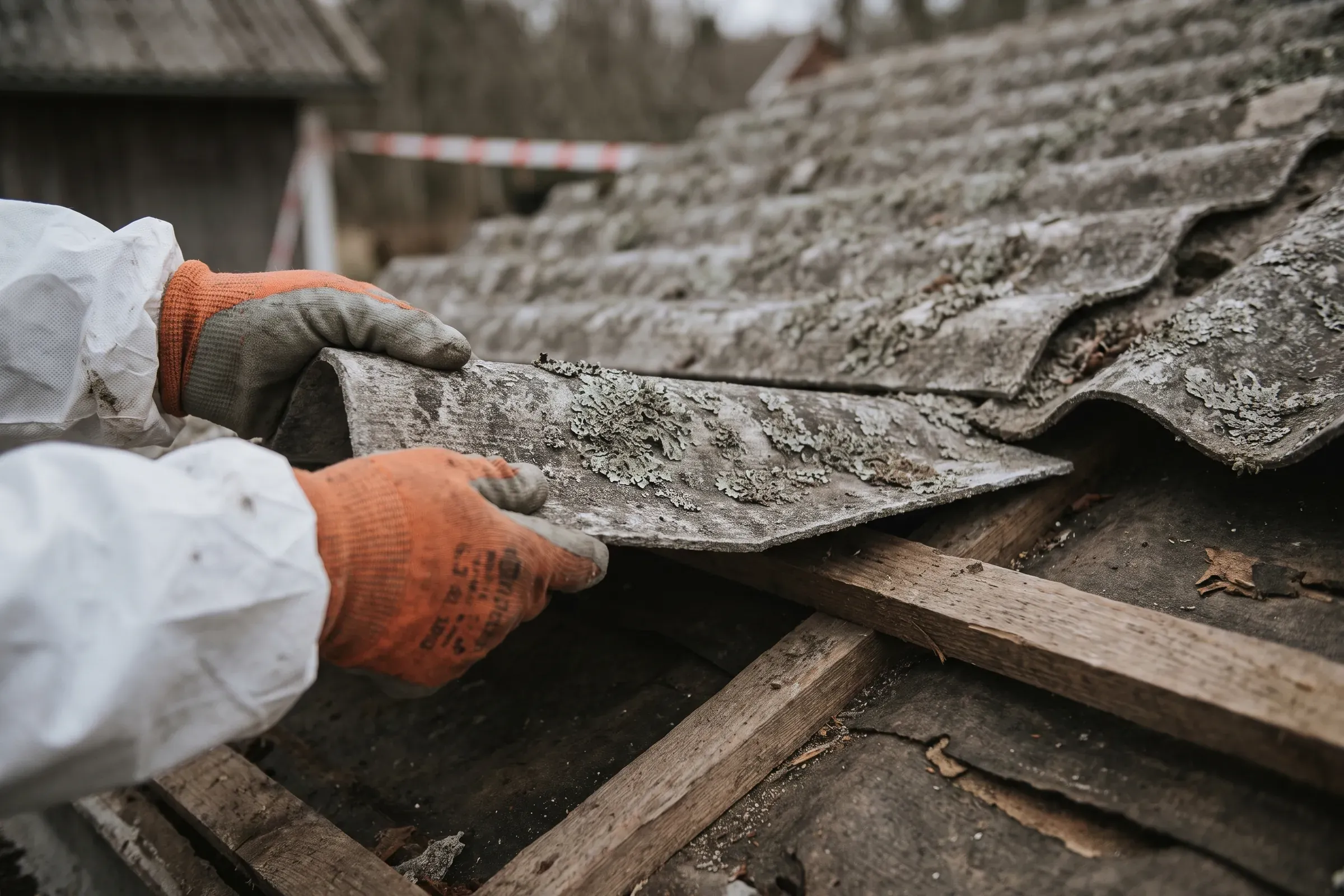
Removal of asbestos roof sheets, packed and delivered to an approved waste site. Learn more about Asbestos and fibre-cement roofs -
Tile adhesive and floors
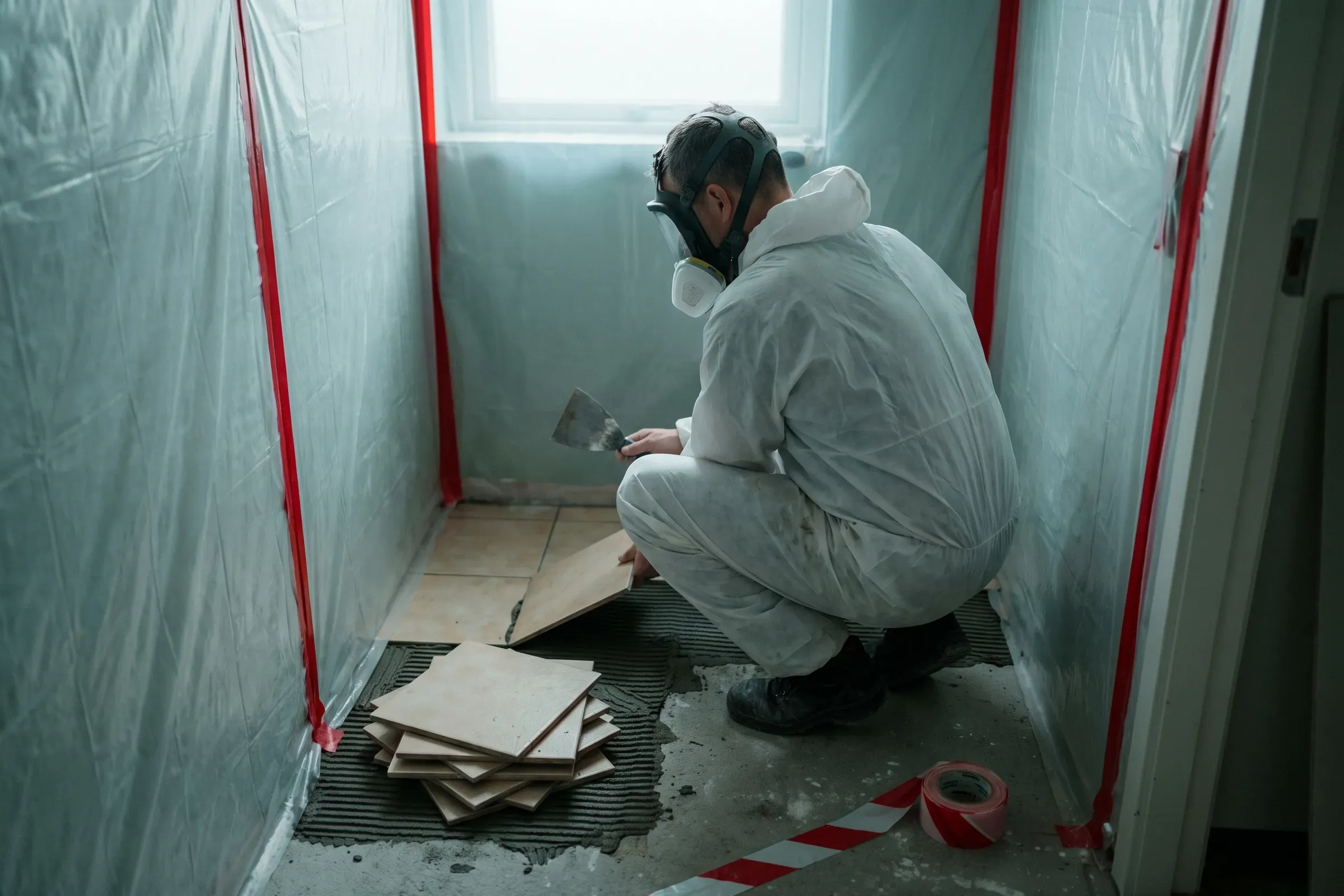
Asbestos tile adhesive, vinyl and floor glue removed under negative pressure before your new floor goes in. Learn more about Tile adhesive and floors -
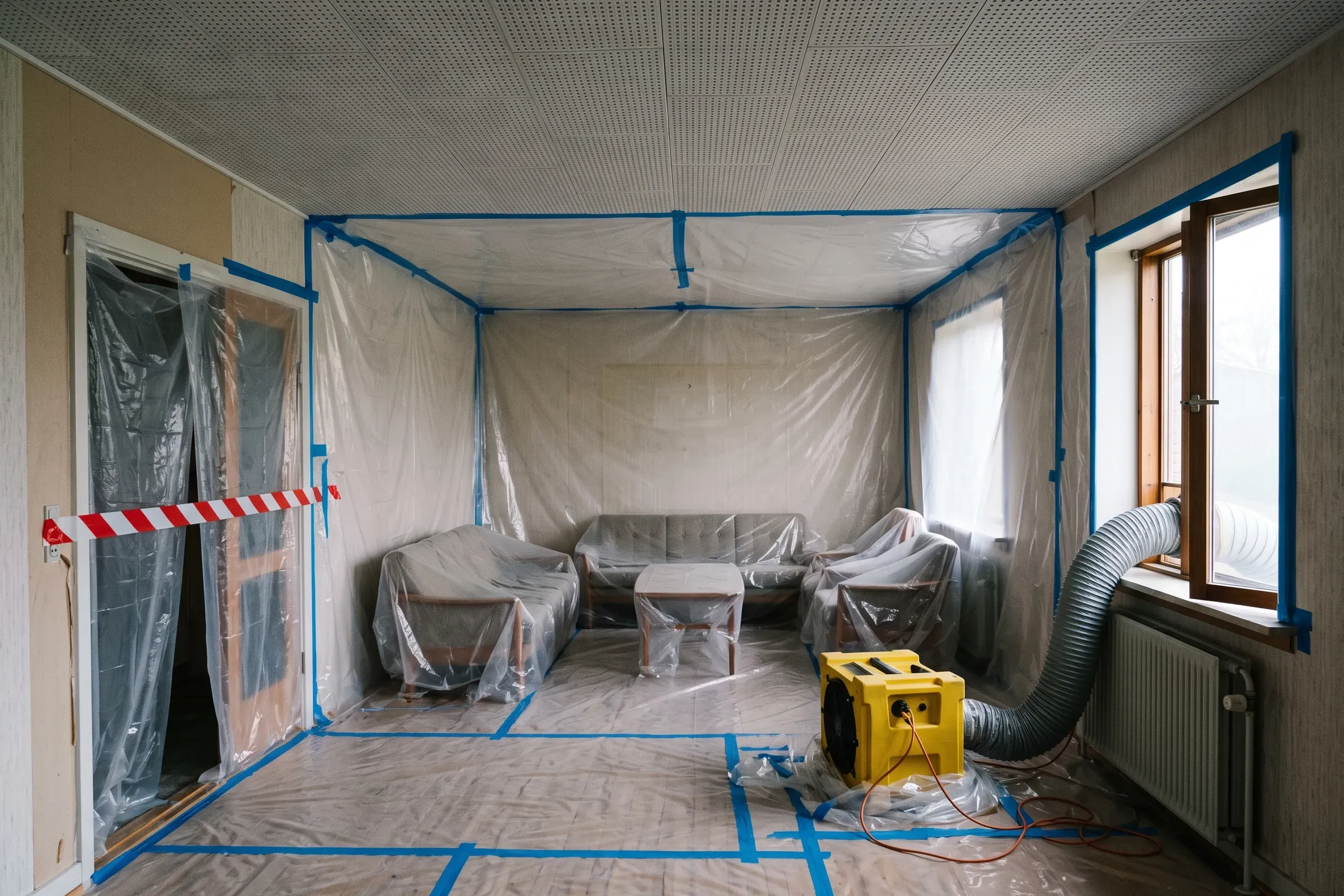
Ceilings and walls
Ceiling boards, wall boards and asbestos filler removed room by room under negative pressure. Learn more about Ceilings and walls -
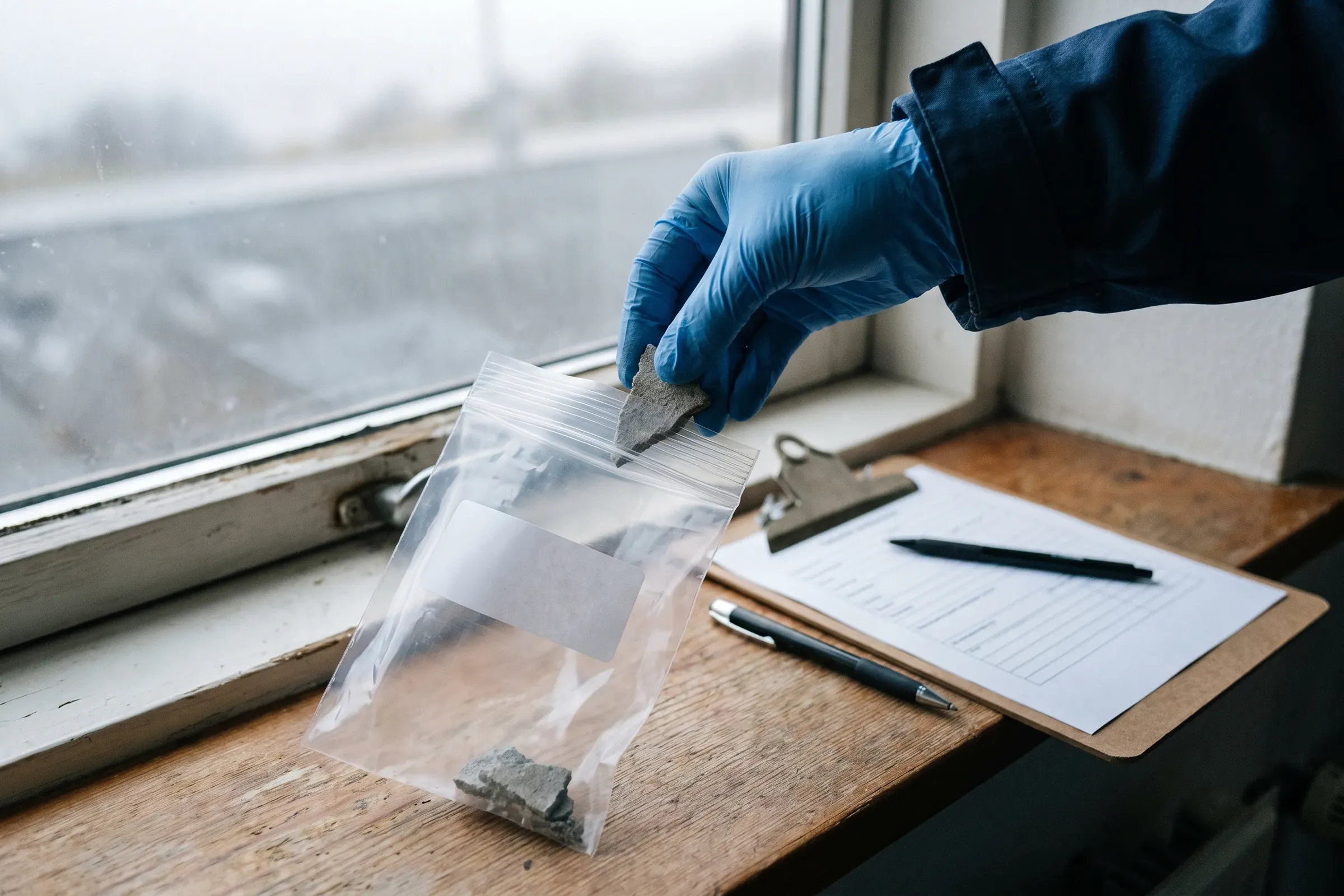
Asbestos survey
Sampling and laboratory analysis so you know what you have before you renovate. Learn more about Asbestos survey -
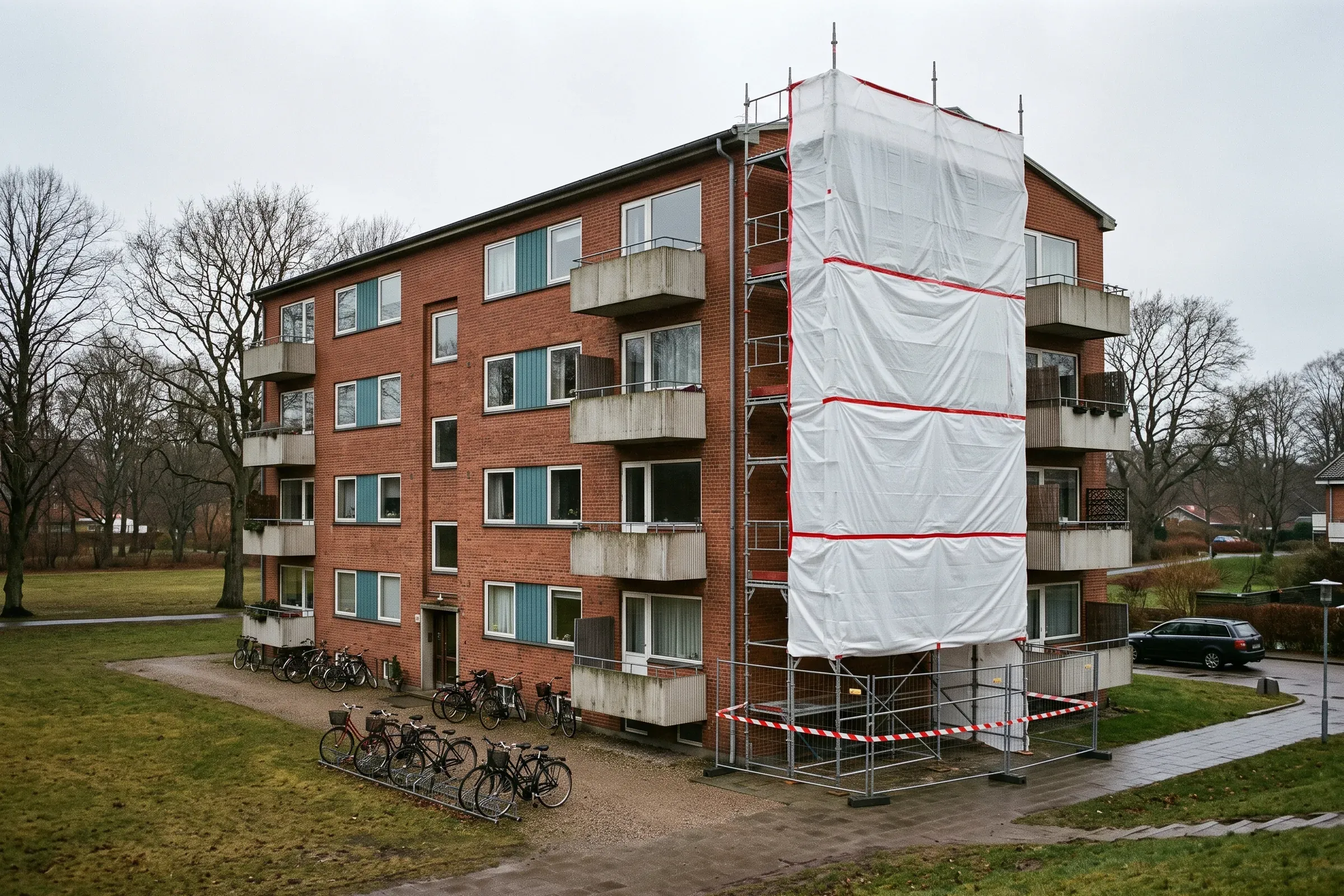
Business and housing associations
Environmental screening, notification, schedule and documentation for properties, contractors and the public sector. Learn more about Business and housing associations